
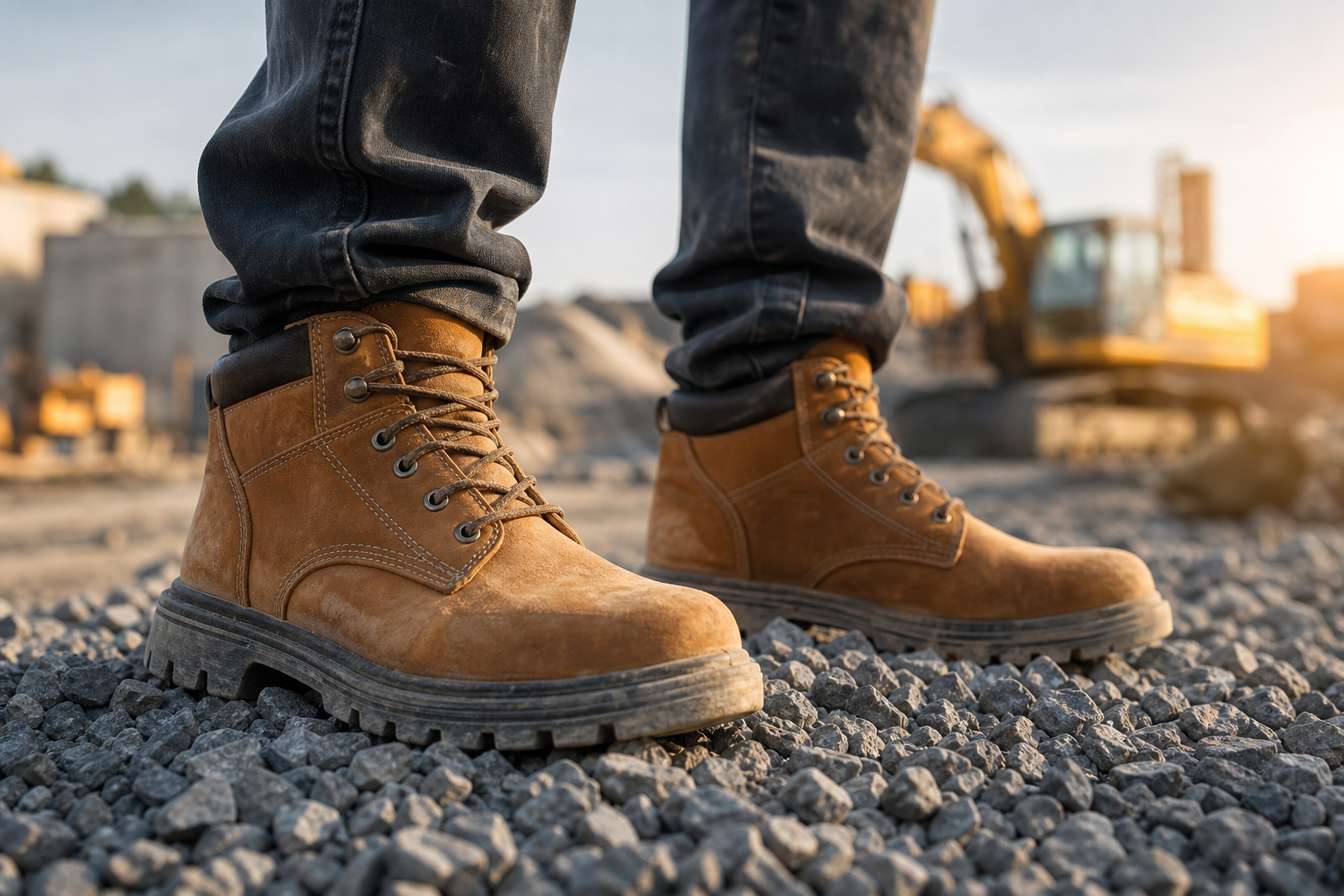
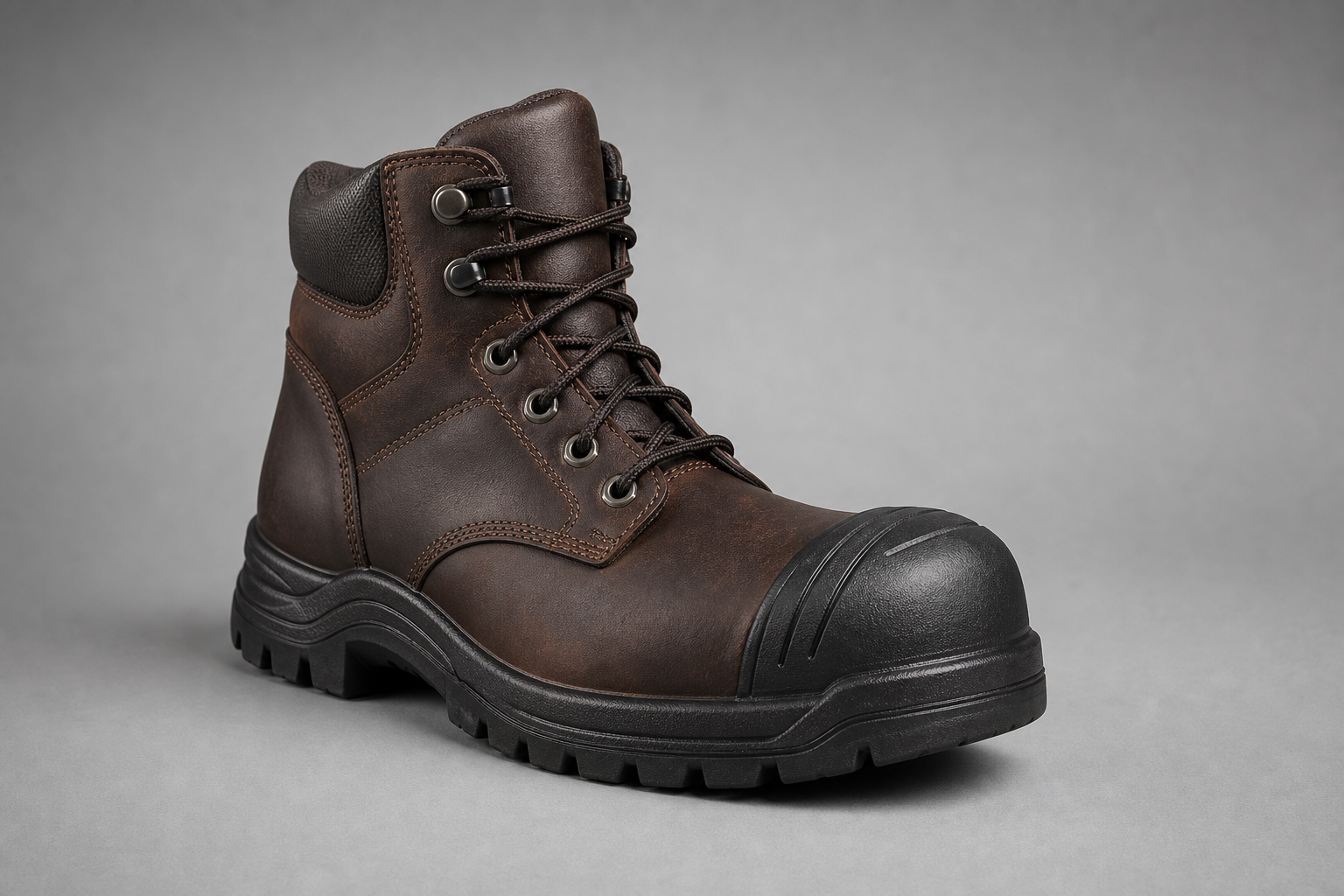
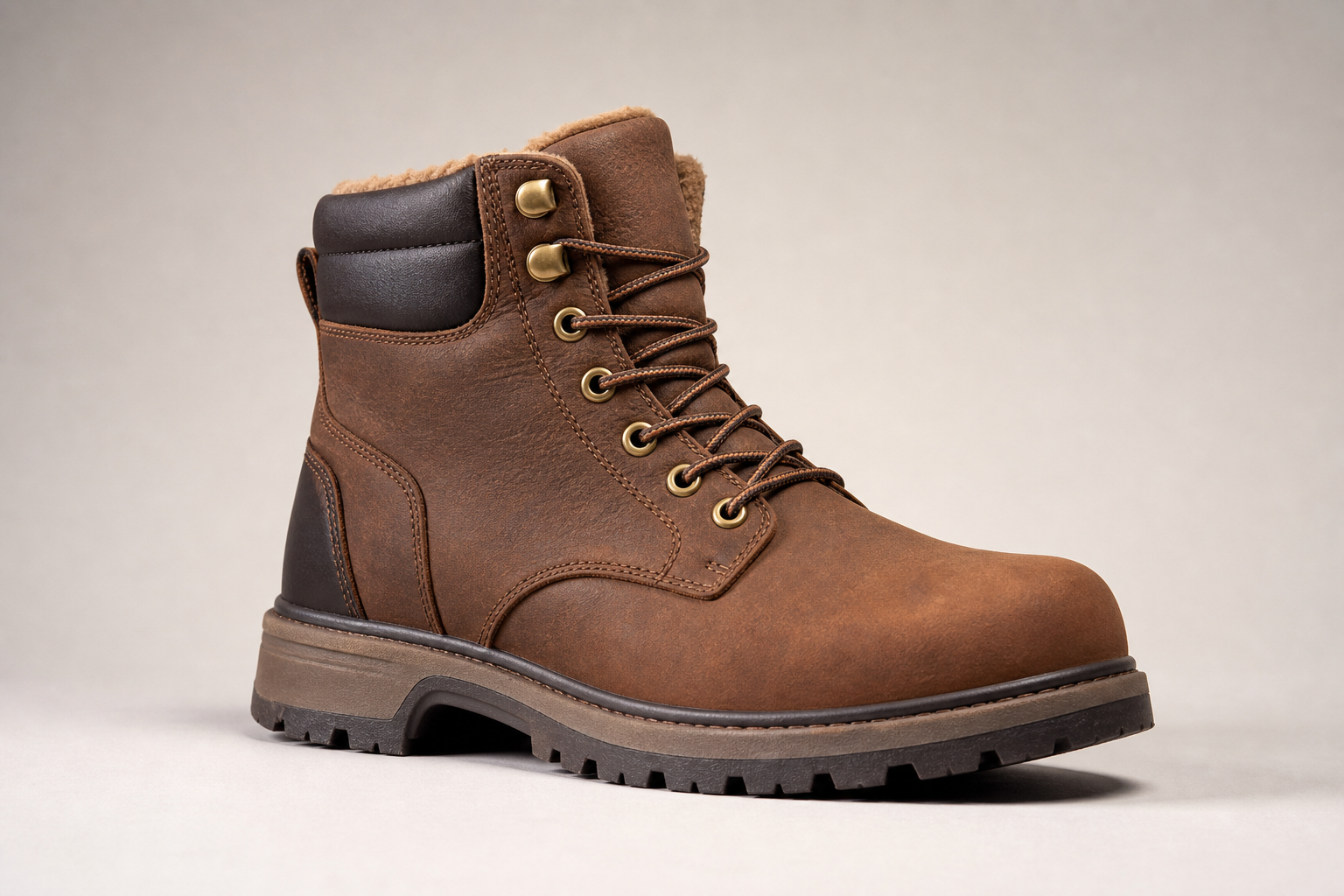
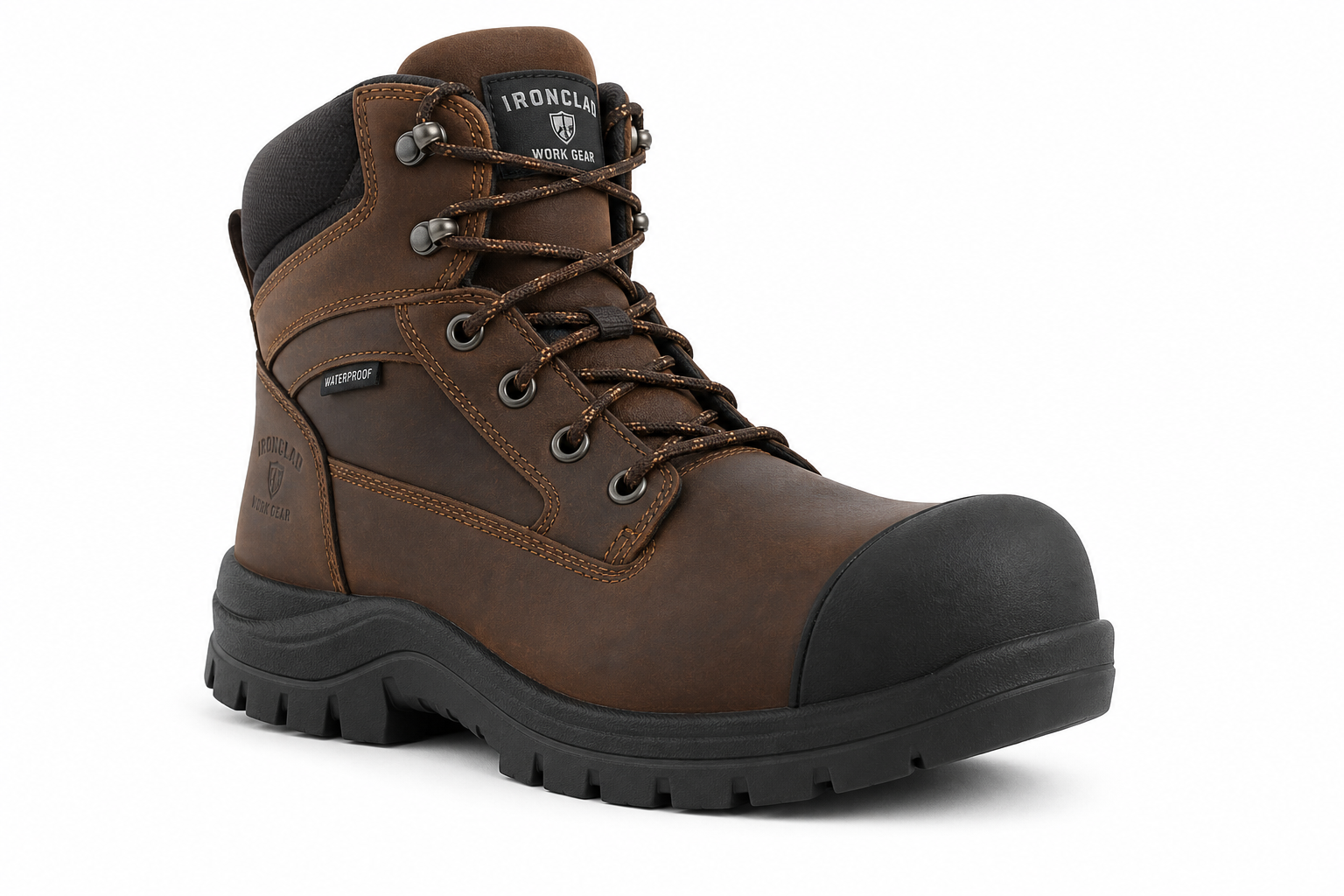
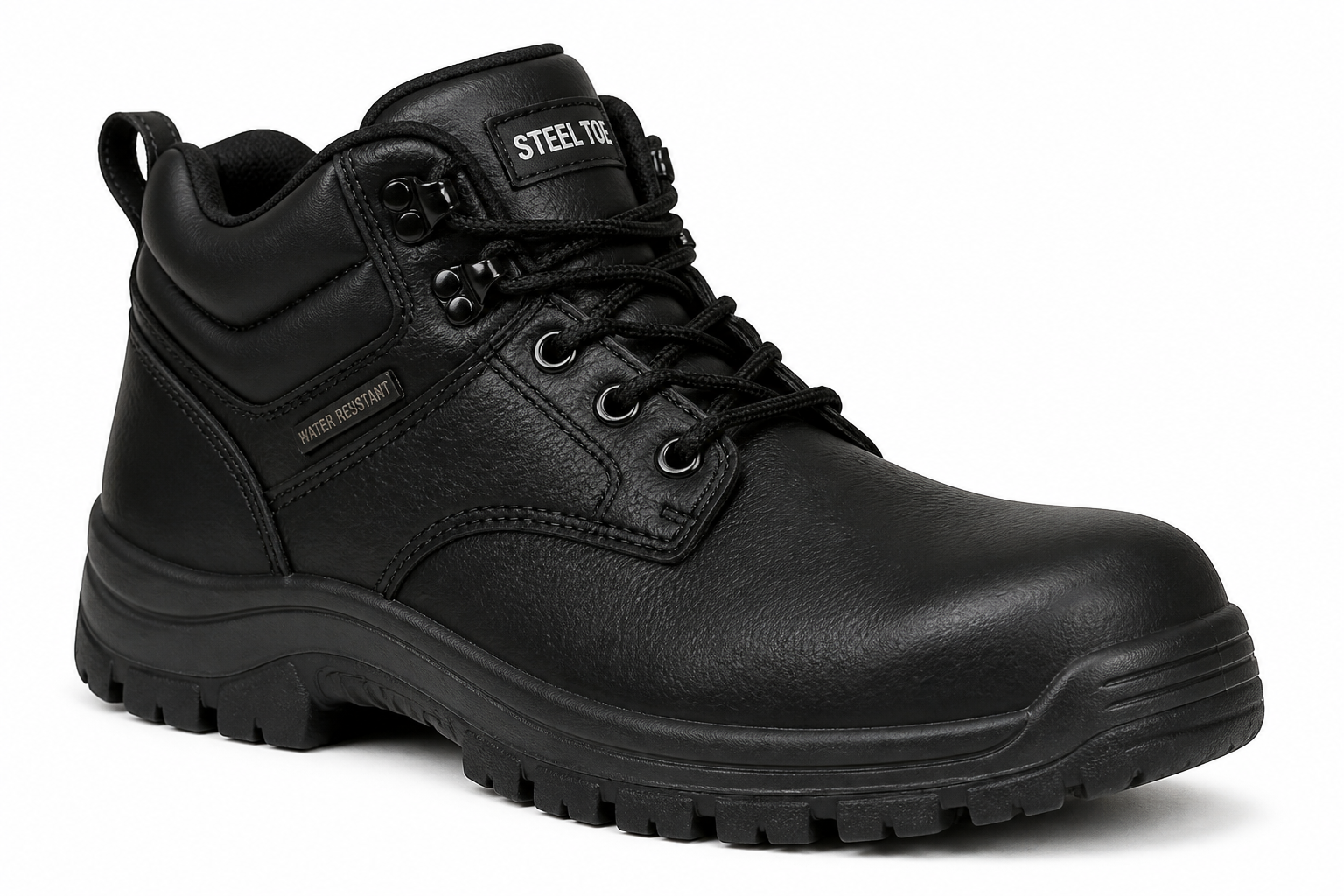
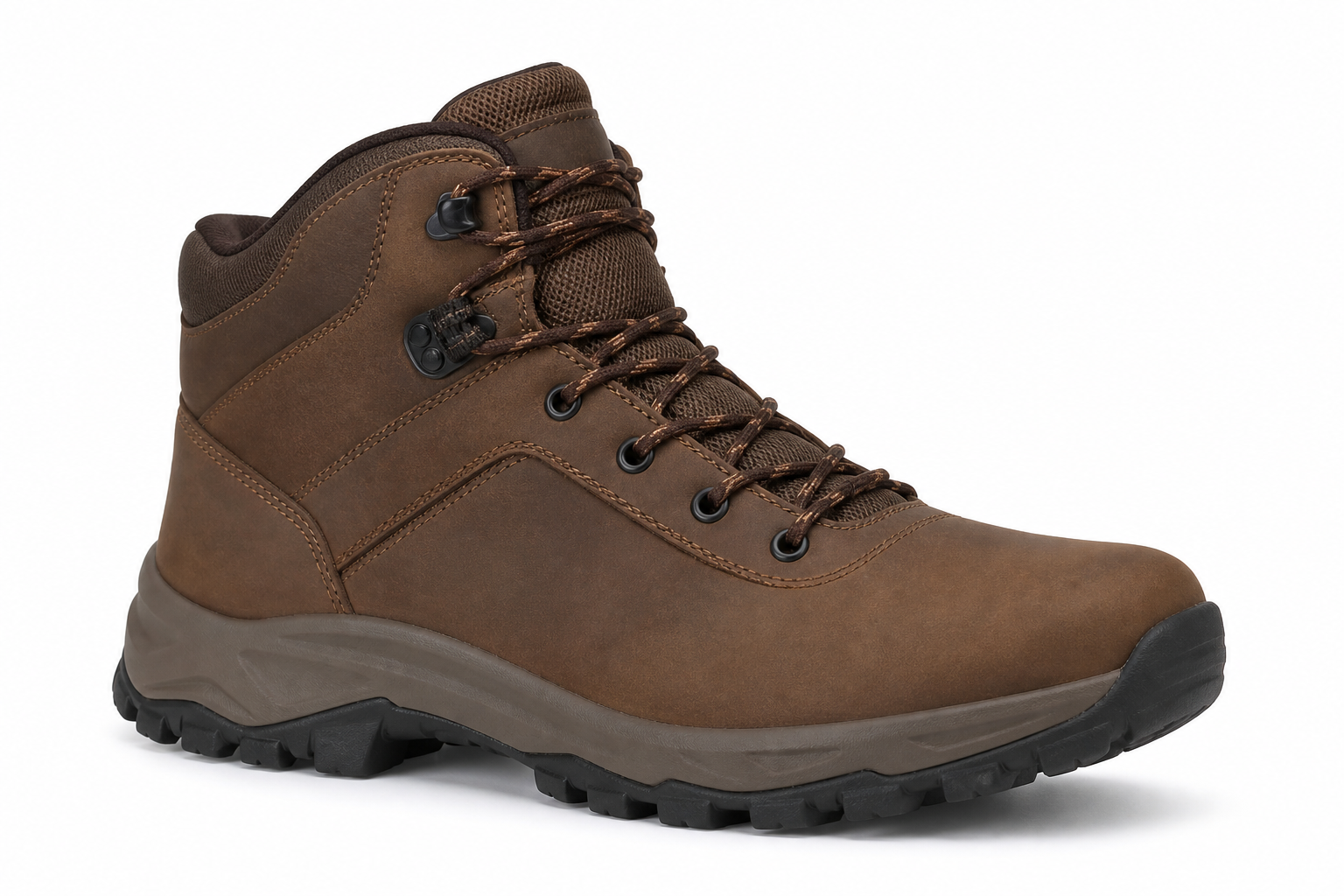
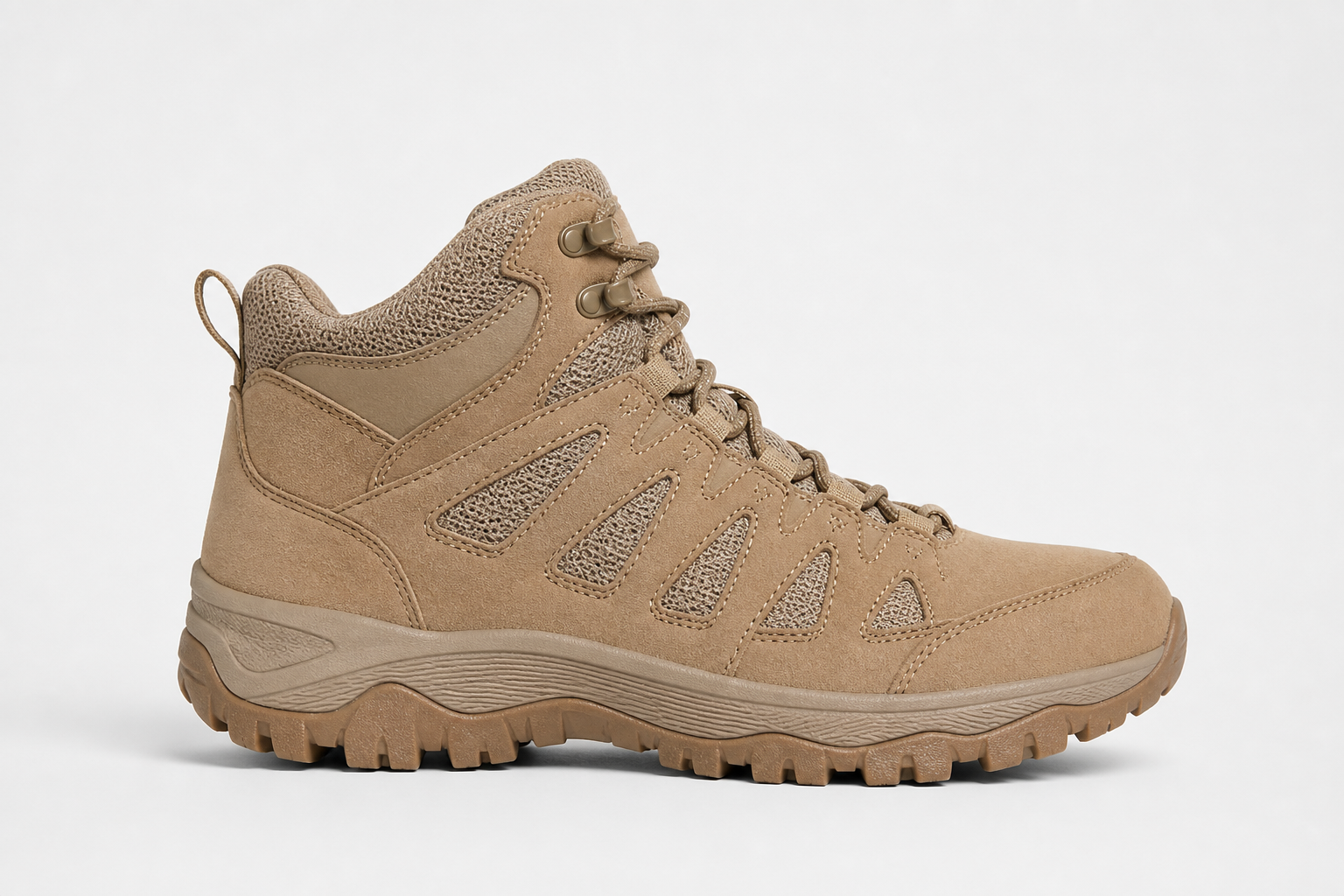
Mountain Gear work boots bridge casual outdoor styling with jobsite durability for construction, landscaping, and light industrial tasks. They are not a replacement for specialized logging boots on steep slopes, but they handle flat commercial sites and homeowner renovation projects without cracking at the welt in the first season.
Contractors who already own premium brands sometimes keep Mountain Gear as backup pairs in the truck — acceptable abrasion resistance at a price that does not sting when drywall mud ruins the upper.
Reinforced uppers
Leather overlays at toe and heel resist abrasion from ladders and gravel. Triple stitching on pull loops prevents blowouts when boots come off muddy.
Insulated variants
Insulated models add thin loft for 40°F morning starts without the bulk of pac boots. Combine with wool socks; avoid over-tightening laces which restricts circulation.
Steel toe crossover
When OSHA requires toe protection, move to dedicated steel toe boots rather than soft-toe work stylings.
Oil and chemical resistance
Outsoles resist common shop fluids but not concentrated solvents. Rinse contact areas promptly and inspect for rubber hardening quarterly.
Electrical hazard note
Only specific SKUs carry EH ratings — verify labeling before electrician work. Never assume all brown work boots are EH certified.
Comfort on concrete
Anti-fatigue insoles help eight-hour standing shifts. Replace stock insoles if knee pain appears after week two.
Rotation extends life
Two pairs rotated weekly dry fully and double calendar lifespan. Log purchase dates to track midsole age.
Summary
Mountain Gear work boots suit light to medium duty where steel toes are optional. Match insulation to climate and keep a dedicated hiking pair for recreation — worksite chemicals degrade trail liners faster.
Sizing at home
Measure feet standing on paper after a walk when they are slightly swollen. Match centimeter length to brand charts rather than guessing from sneaker sizes. Width matters as much as length — pinching at the fifth toe means try wide versions if offered.
Try boots with the socks you actually hike in. Thin dress socks lie about fit and cause returns that waste shipping emissions and your weekend plans.
Warranty habits
Keep receipts and photos of defects within the first thirty days. Outsole delamination and eyelets pulling free are manufacturing issues; scuffs from normal trail abrasion are not. Document problems early with dated photos sent to customer service.
Jobsite rotation
Concrete dust and drywall compound abrade leather faster than forest duff. Brush boots nightly during renovation weeks and apply conditioner monthly to prevent surface cracking at flex creases.
Pair soft-toe work boots with removable metatarsal guards only when your employer approves external add-ons — not all Mountain Gear uppers accommodate aftermarket guards without lace interference.
Commute crossover
Many owners wear the same pair from jobsite to grocery store. Wipe oil and mud before entering vehicles to keep cabin air clean and preserve resale if you sell the truck later with the boots still in the bed.
Long shifts
Standing on steel grating eight hours demands cushioned insoles rated for compression set. Replace insoles every six months even if the leather upper still looks presentable.
Storage basics
Never store boots near basement dehumidifier exhaust that dries leather overnight into cracks. Room-temperature airflow with shoe trees preserves collar shape and prevents mildew in fleece linings after damp hikes.
Label each pair with purchase year on inner tongue — midsole foam aging is invisible until knee soreness appears after otherwise easy miles.
Resole decisions
Budget boots rarely justify full resoles when new pairs cost similar money. Exception: steel toe uppers with intact caps but worn soles on a break-in-perfect fit — local cobblers can sometimes replace outsoles if the welt allows.
Return policies
Most retailers accept unworn returns within thirty days if boxes and tags remain intact. Walk only indoors on clean floors during try-on so you preserve return eligibility if the width is wrong.
Online buyers should measure both feet — many people have slight asymmetry that matters in safety toe boxes where cap position cannot shift.
Community tips
Local hiking clubs and trade forums often compare Ridge versus Ascent for regional trails. Search your nearest state park name plus boot model to find trip reports with mileage counts that match your fitness level.