
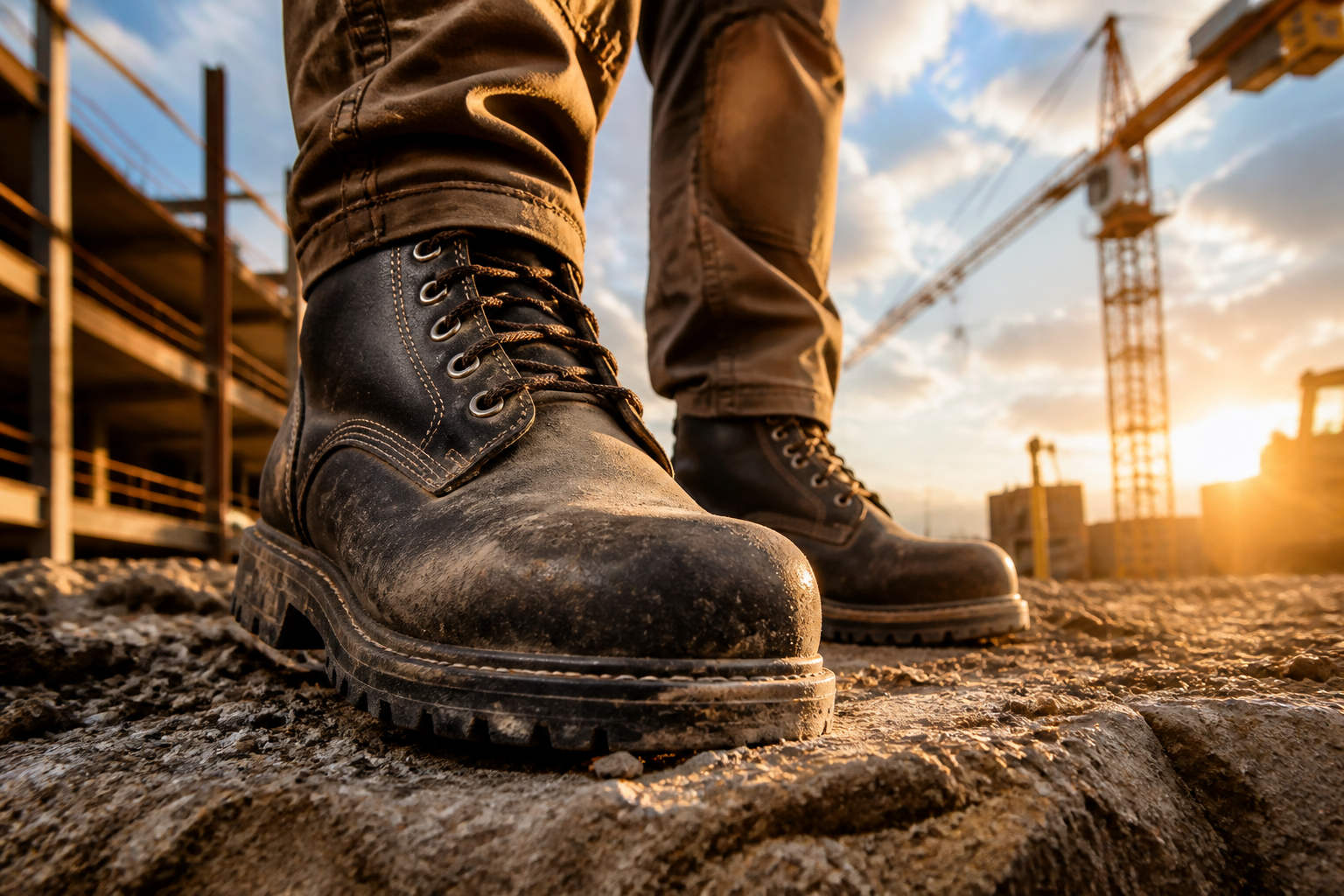
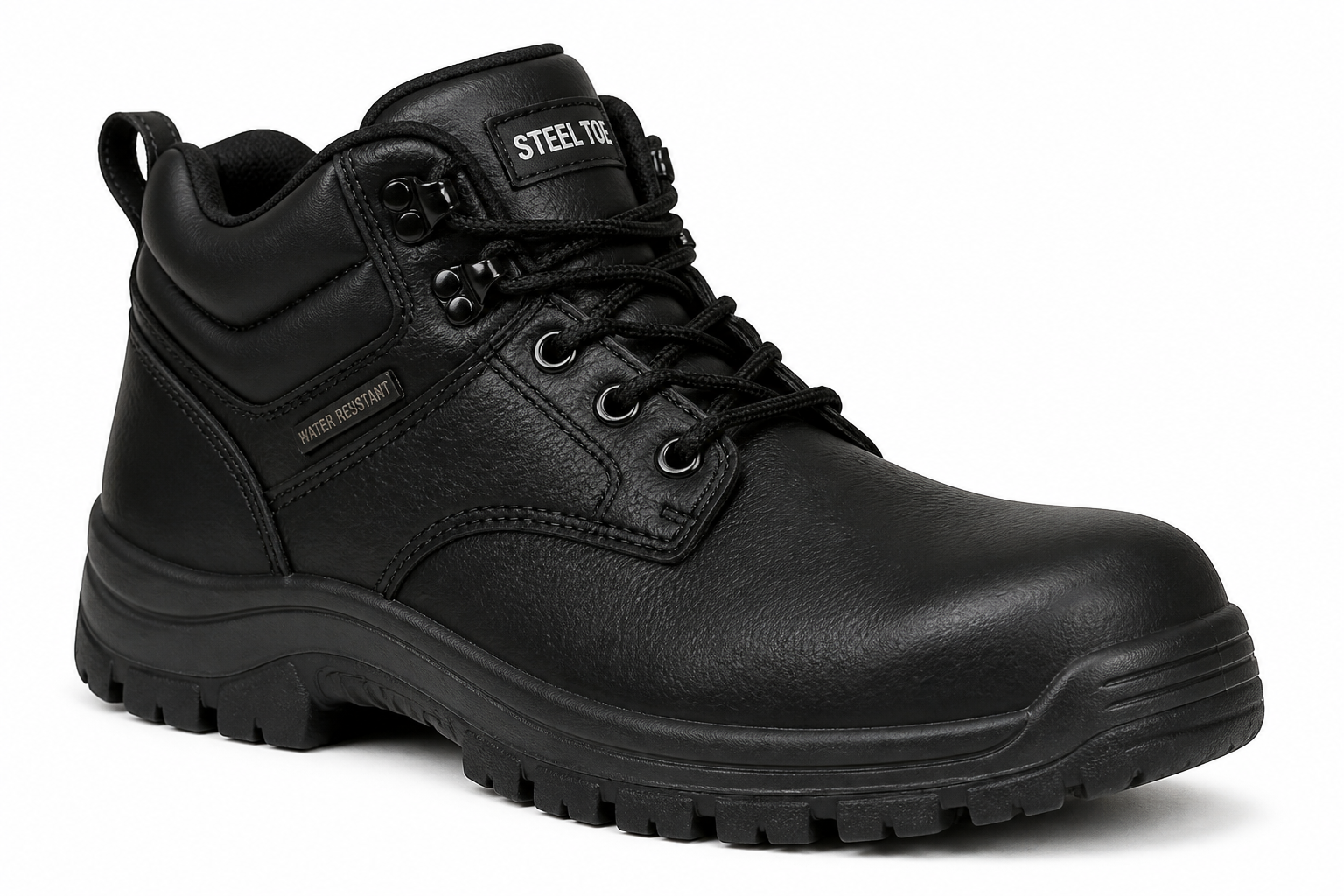
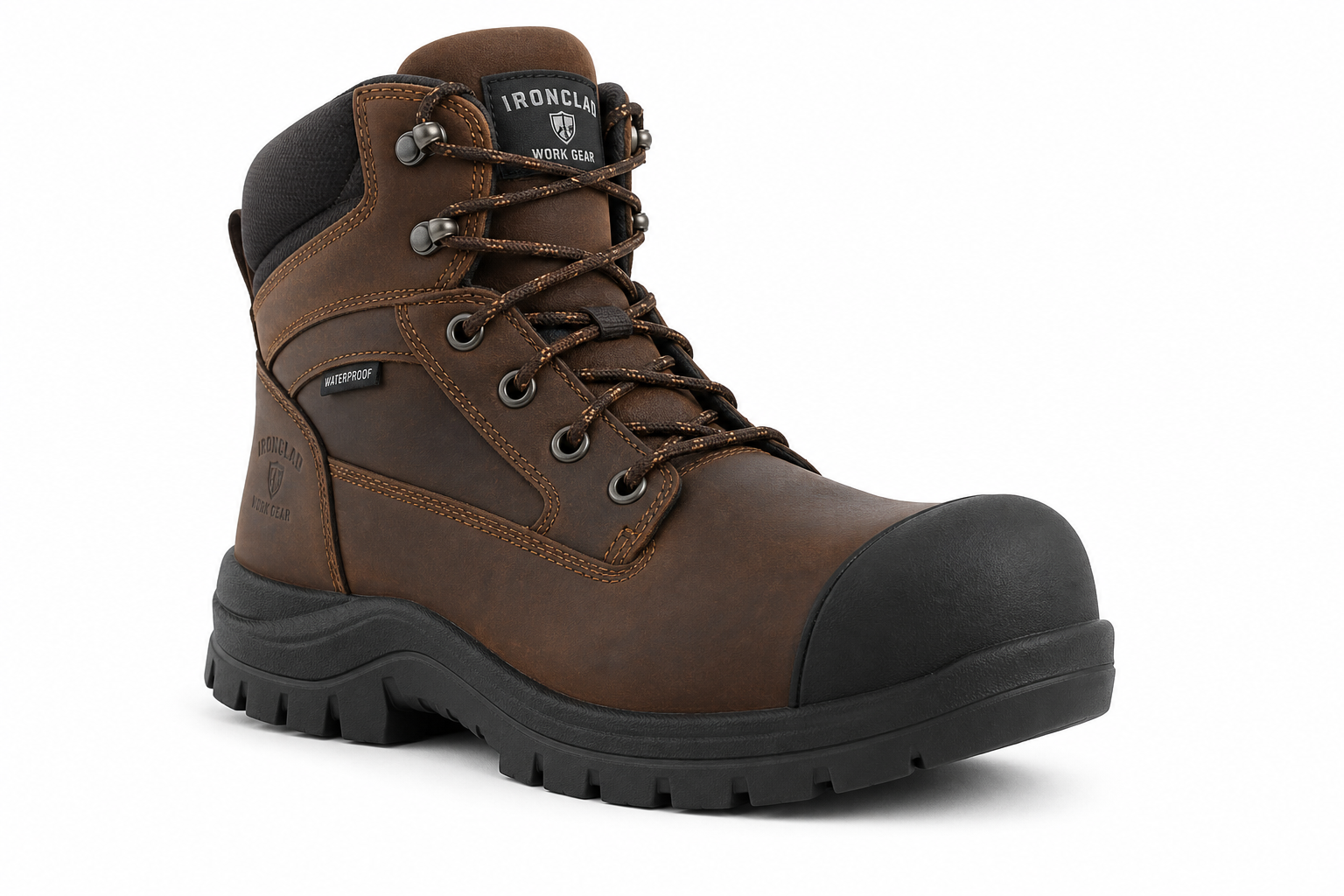
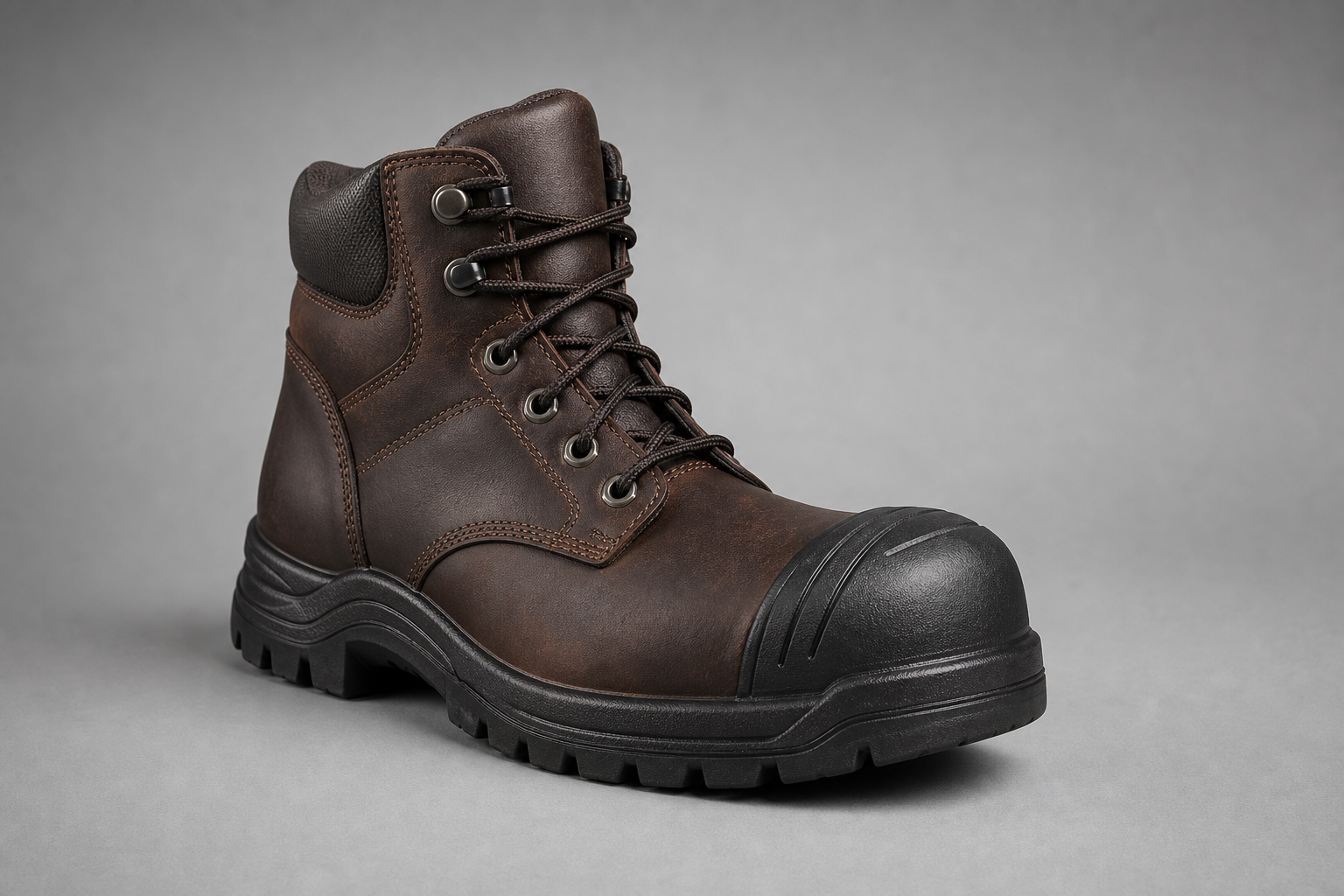
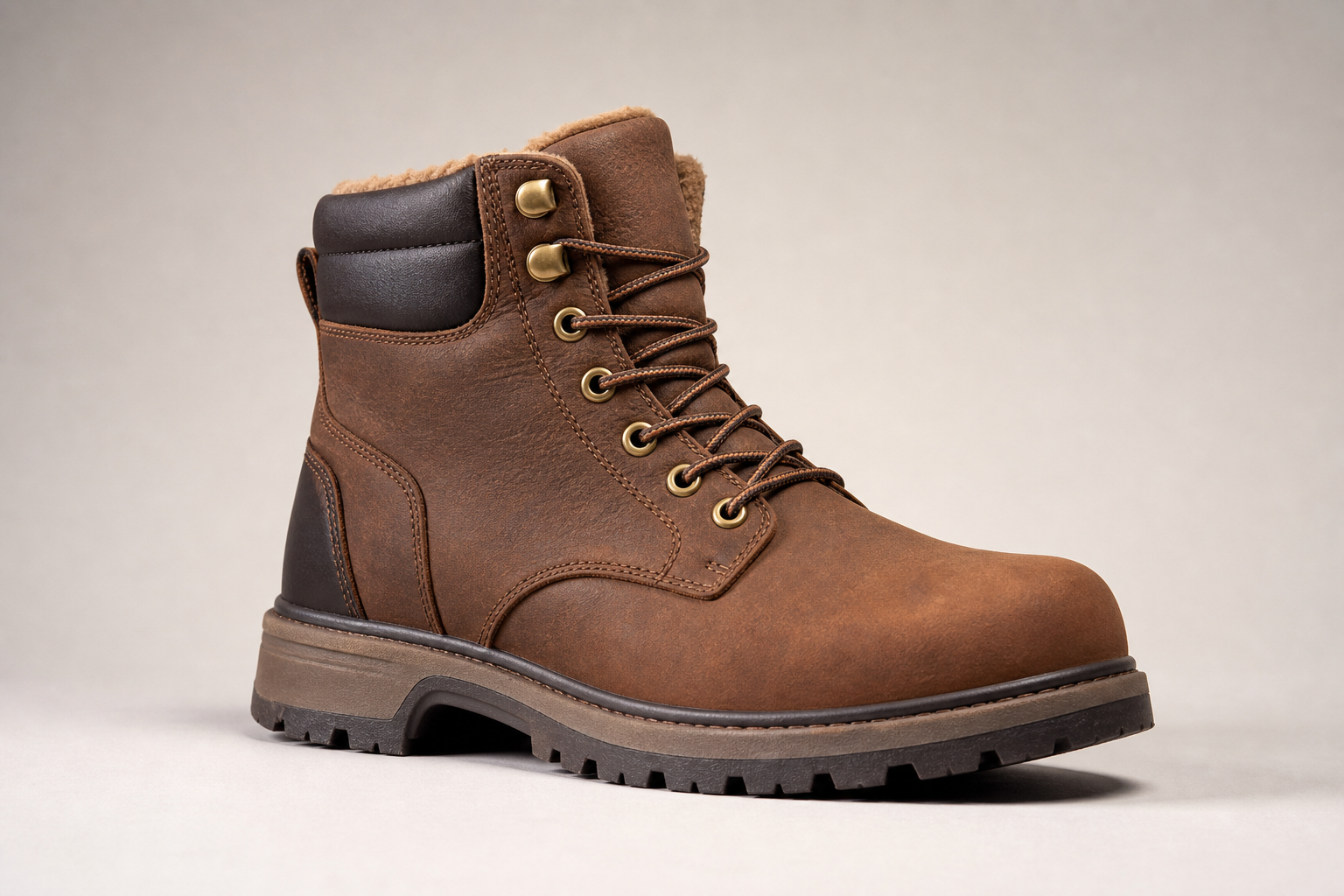
Mountain Gear steel toe boots add impact protection for warehouses, fabrication shops, and sites where dropped tools are a daily risk. They sit at the accessible end of the safety footwear market — appropriate when your employer reimburses modest footwear allowances rather than mandating a single approved vendor catalog.
Forklift operators and pallet jack drivers appreciate wide toe boxes that do not pinch when feet swell during afternoon shifts, provided laces are tightened in two zones for heel lock and forefoot relief.
Protection standards
Steel caps meet common ASTM F2413 requirements when labeled on box and tongue. Confirm compression and impact ratings with your safety officer before first shift.
Weight tradeoff
Steel adds ounces versus composite toes but costs less. Long walking shifts feel the difference — prioritize lightweight upper materials if you patrol large plants.
Fit with caps
Caps do not flex — toe room is fixed. Never size down hoping leather will stretch over steel. Width issues show as numb toes within thirty minutes.
Electrical hazard pairs
EH-rated soles insulate against accidental contact in dry conditions. They are not miracle protection — follow lockout procedures regardless of footwear.
Insulated steel toes
Cold storage workers should choose insulated steel variants listed under work boots rather than unlined safety hikers.
Metal detector sites
Steel triggers airport and secure facility scanners. Composite-toe alternatives from other brands may be required — Mountain Gear steel lines target traditional jobsites.
Maintenance
Replace when cap exposure shows through worn leather or after any known heavy impact event even if cosmetic damage seems minor.
Bottom line
Choose Mountain Gear steel toes when budget and straightforward ASTM steel protection matter. Pair with moisture-wicking socks and rotate pairs to manage odor and midsole compression.
Inspect toe caps quarterly for dents after impacts — even minor creases can indicate compromised protection that warrants replacement regardless of upper condition.
Sizing at home
Measure feet standing on paper after a walk when they are slightly swollen. Match centimeter length to brand charts rather than guessing from sneaker sizes. Width matters as much as length — pinching at the fifth toe means try wide versions if offered.
Try boots with the socks you actually hike in. Thin dress socks lie about fit and cause returns that waste shipping emissions and your weekend plans.
Warranty habits
Keep receipts and photos of defects within the first thirty days. Outsole delamination and eyelets pulling free are manufacturing issues; scuffs from normal trail abrasion are not. Document problems early with dated photos sent to customer service.
Shift comfort
Twelve-hour warehouse shifts need midsole rebound more than upper polish. Tap the heel — dead foam feels dull with no spring compared to a new pair beside it on the shelf.
Anti-puncture insoles are separate from steel toes — confirm whether your site requires puncture-resistant plates through the outsole, not just toe caps.
Odor control
Rotate two steel toe pairs with washable antimicrobial insoles. Baking soda overnight inside each boot absorbs moisture without masking the need to replace saturated foam liners.
Storage basics
Never store boots near basement dehumidifier exhaust that dries leather overnight into cracks. Room-temperature airflow with shoe trees preserves collar shape and prevents mildew in fleece linings after damp hikes.
Label each pair with purchase year on inner tongue — midsole foam aging is invisible until knee soreness appears after otherwise easy miles.
Resole decisions
Budget boots rarely justify full resoles when new pairs cost similar money. Exception: steel toe uppers with intact caps but worn soles on a break-in-perfect fit — local cobblers can sometimes replace outsoles if the welt allows.
Return policies
Most retailers accept unworn returns within thirty days if boxes and tags remain intact. Walk only indoors on clean floors during try-on so you preserve return eligibility if the width is wrong.
Online buyers should measure both feet — many people have slight asymmetry that matters in safety toe boxes where cap position cannot shift.
Community tips
Local hiking clubs and trade forums often compare Ridge versus Ascent for regional trails. Search your nearest state park name plus boot model to find trip reports with mileage counts that match your fitness level.