
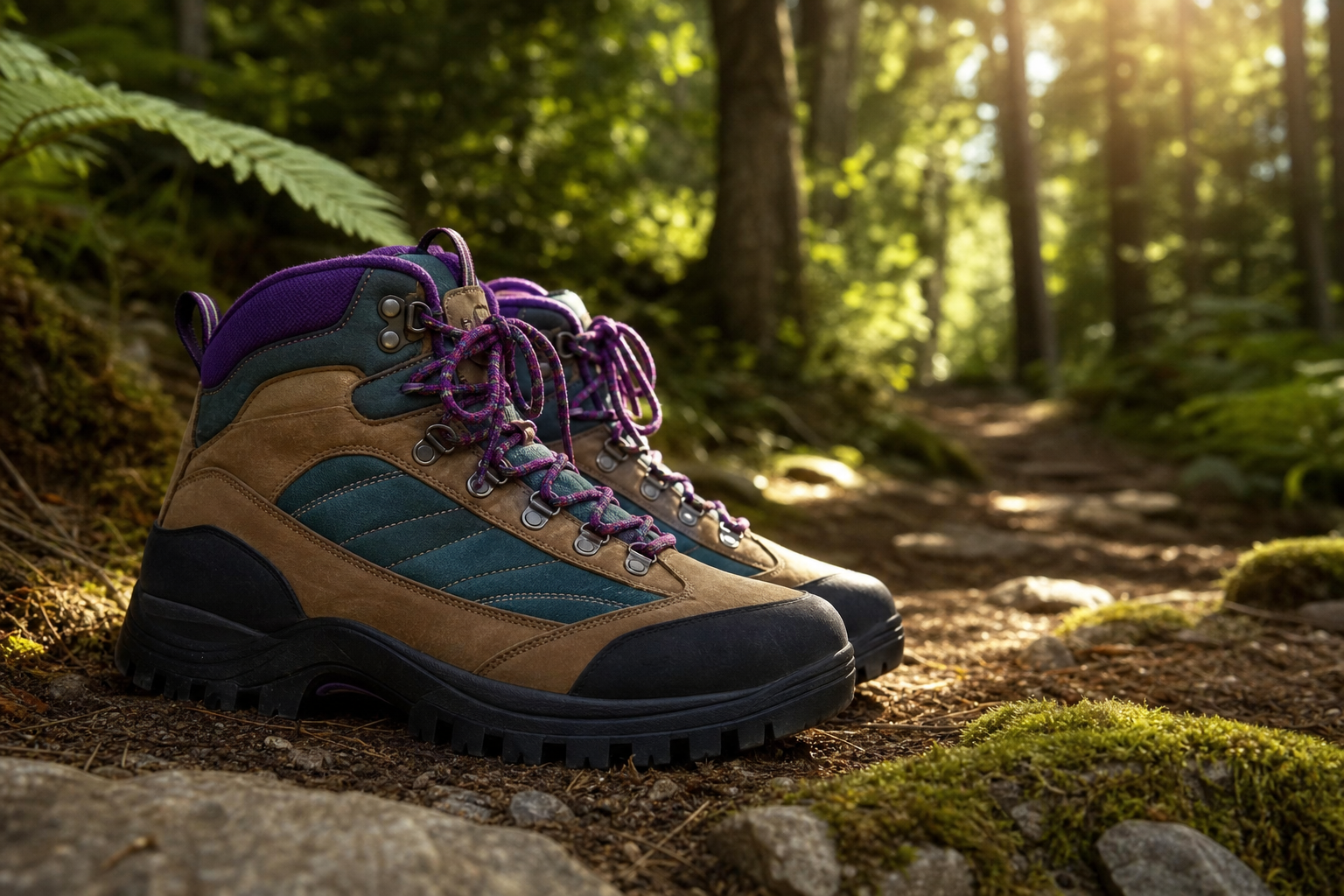
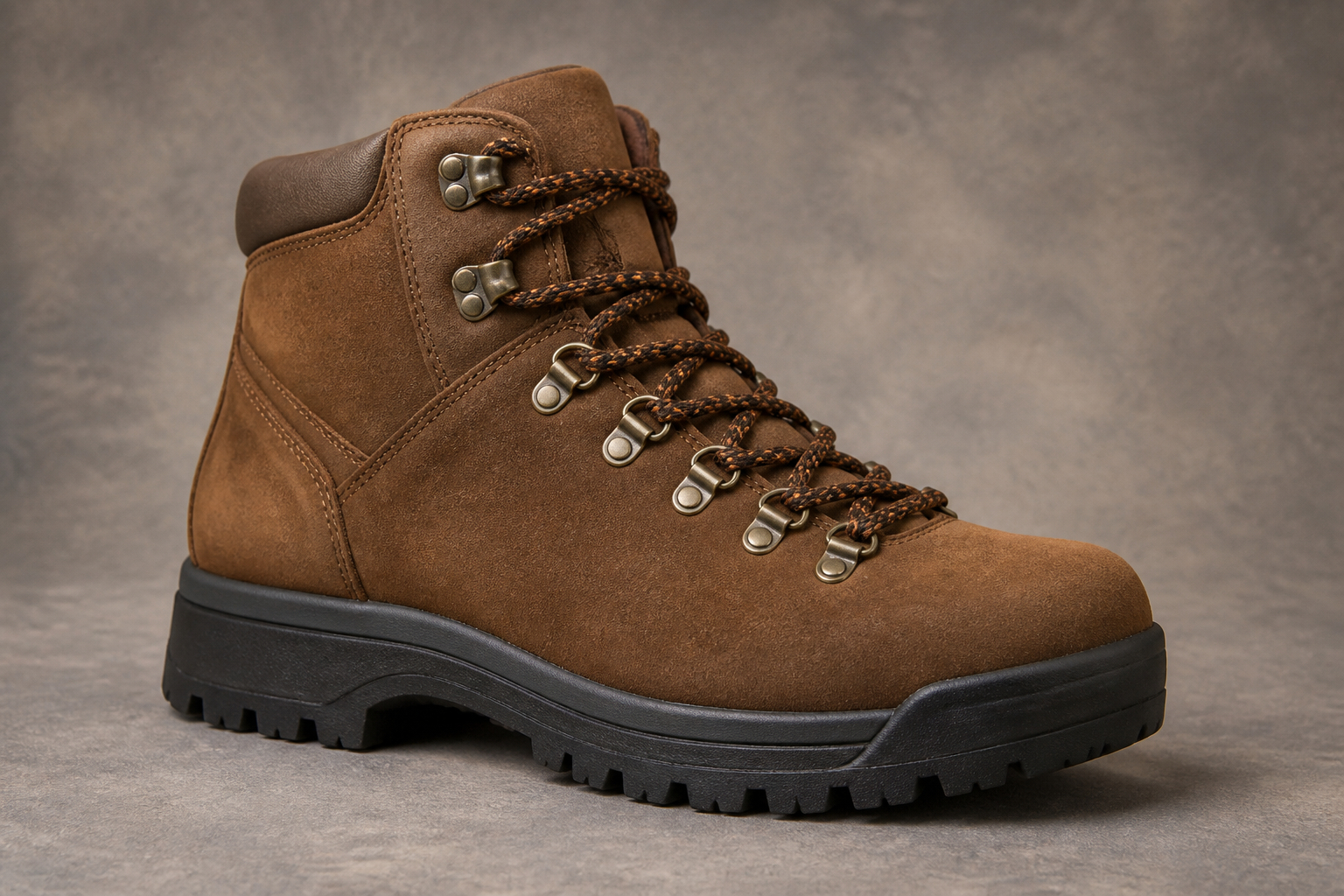
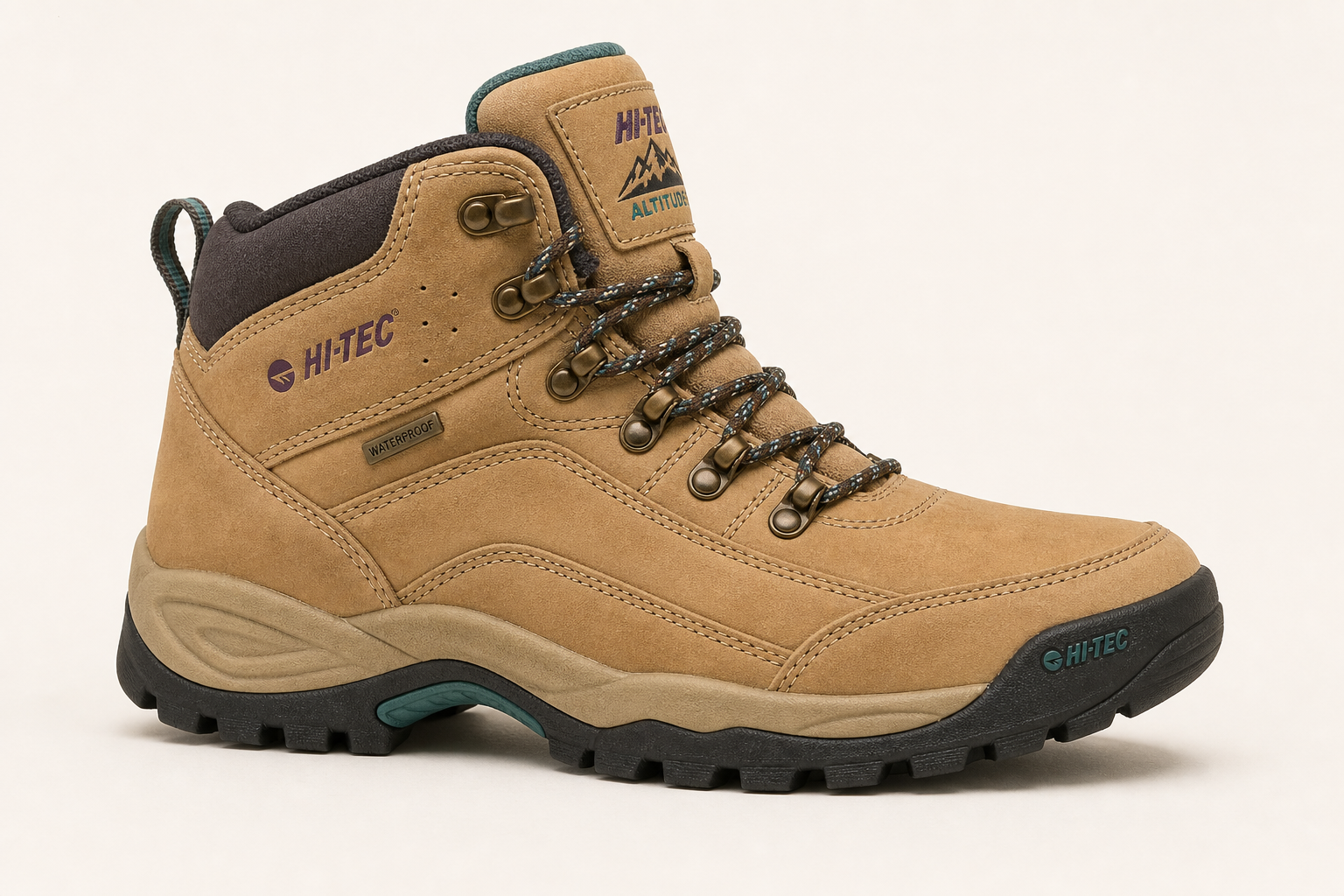
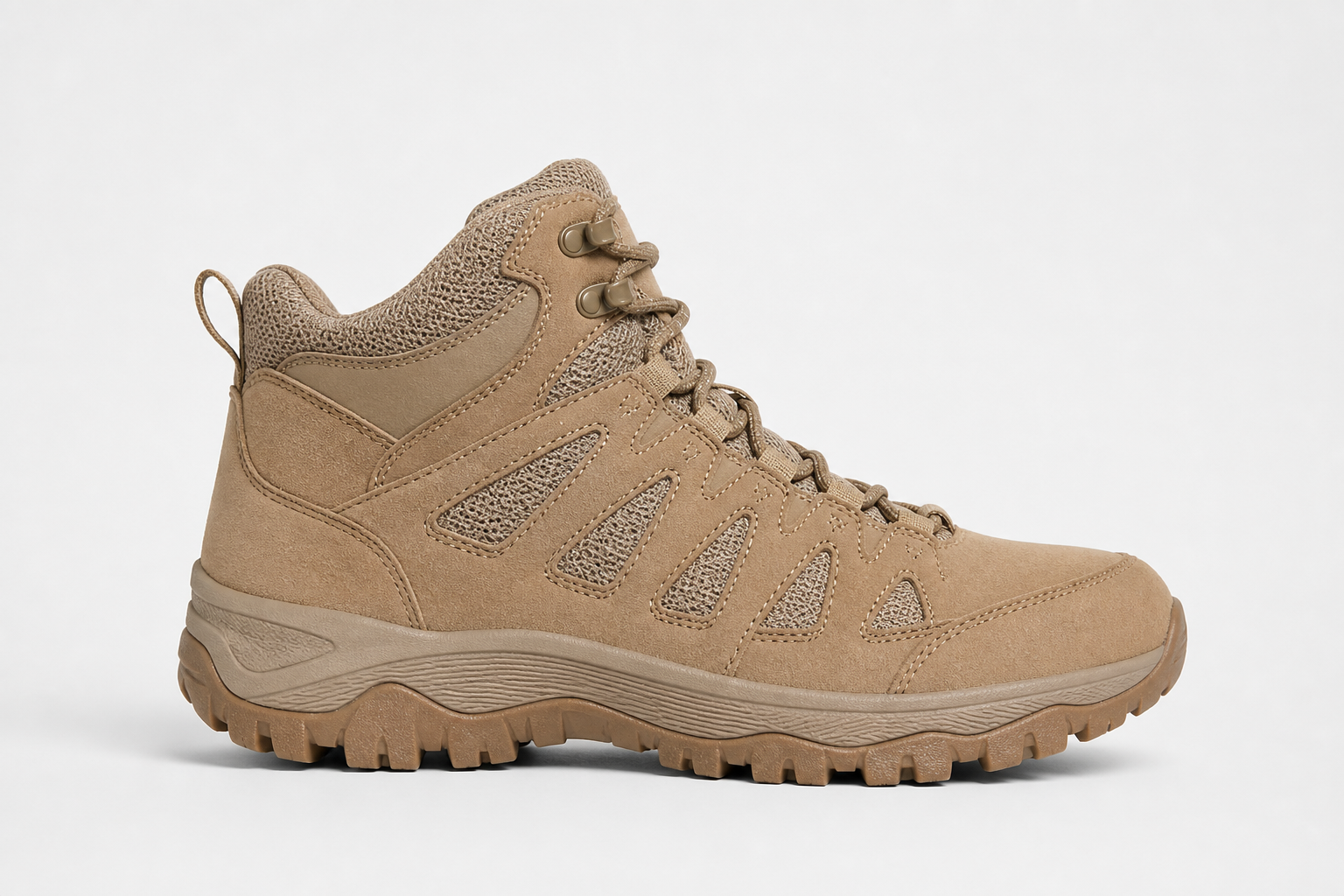
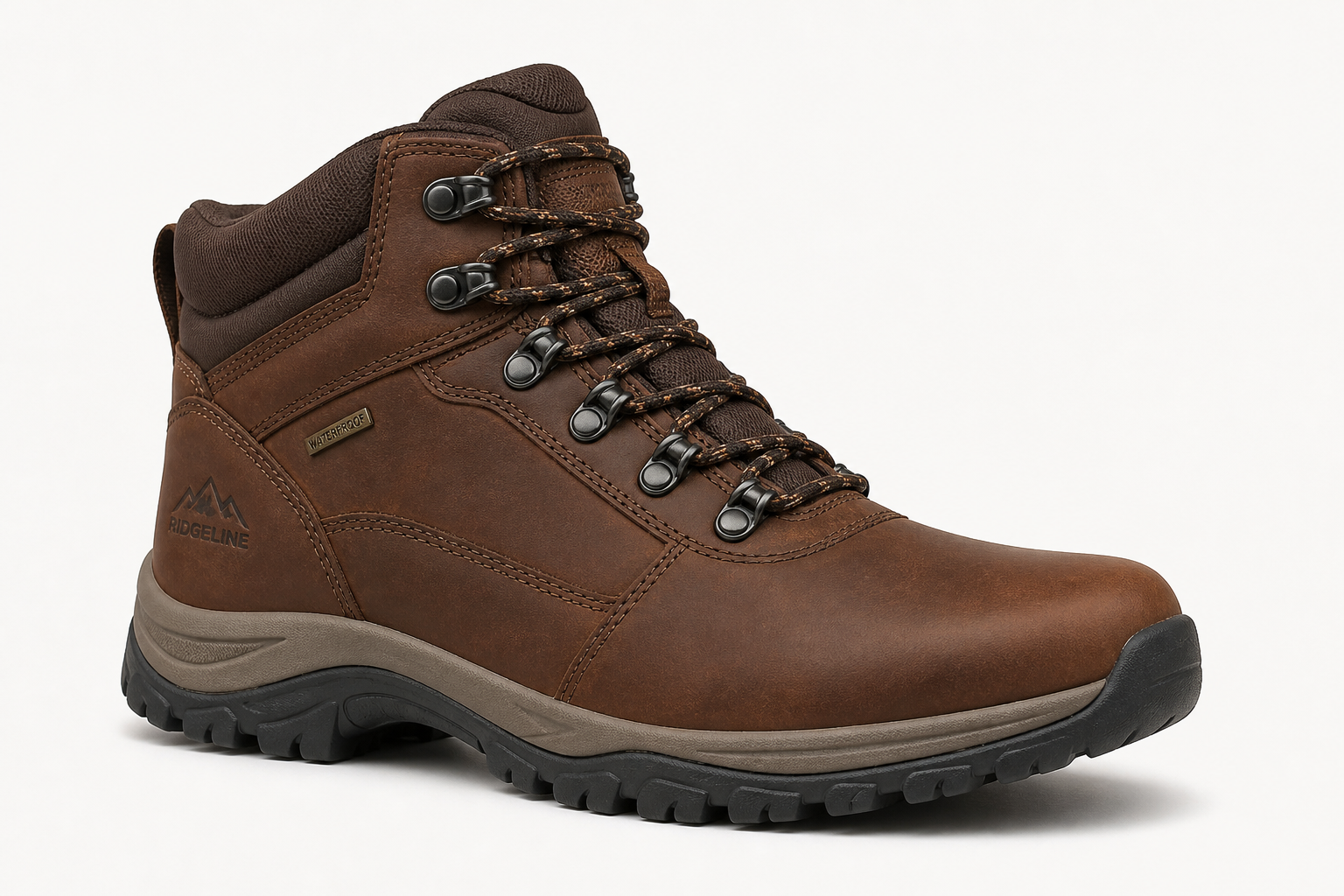
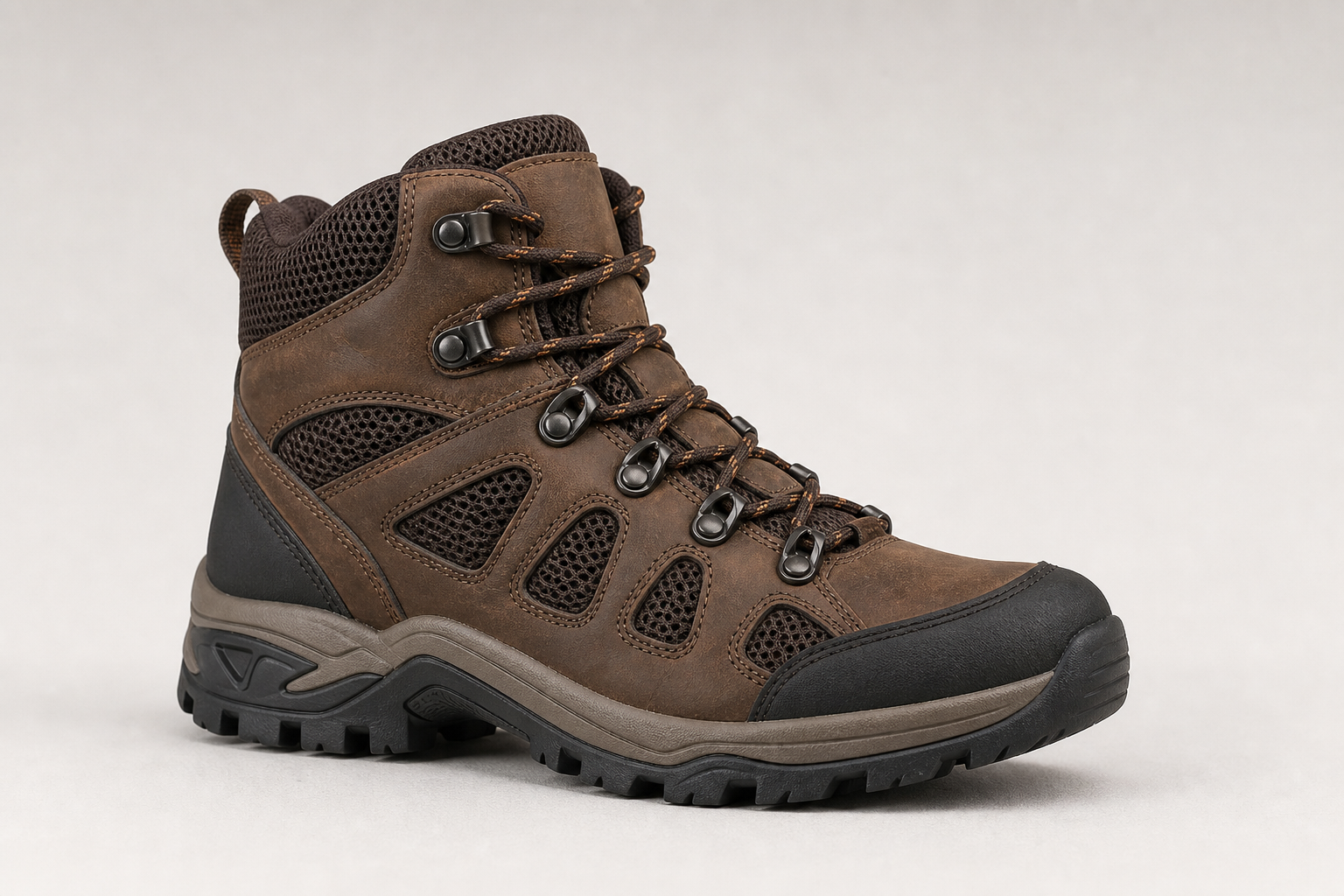
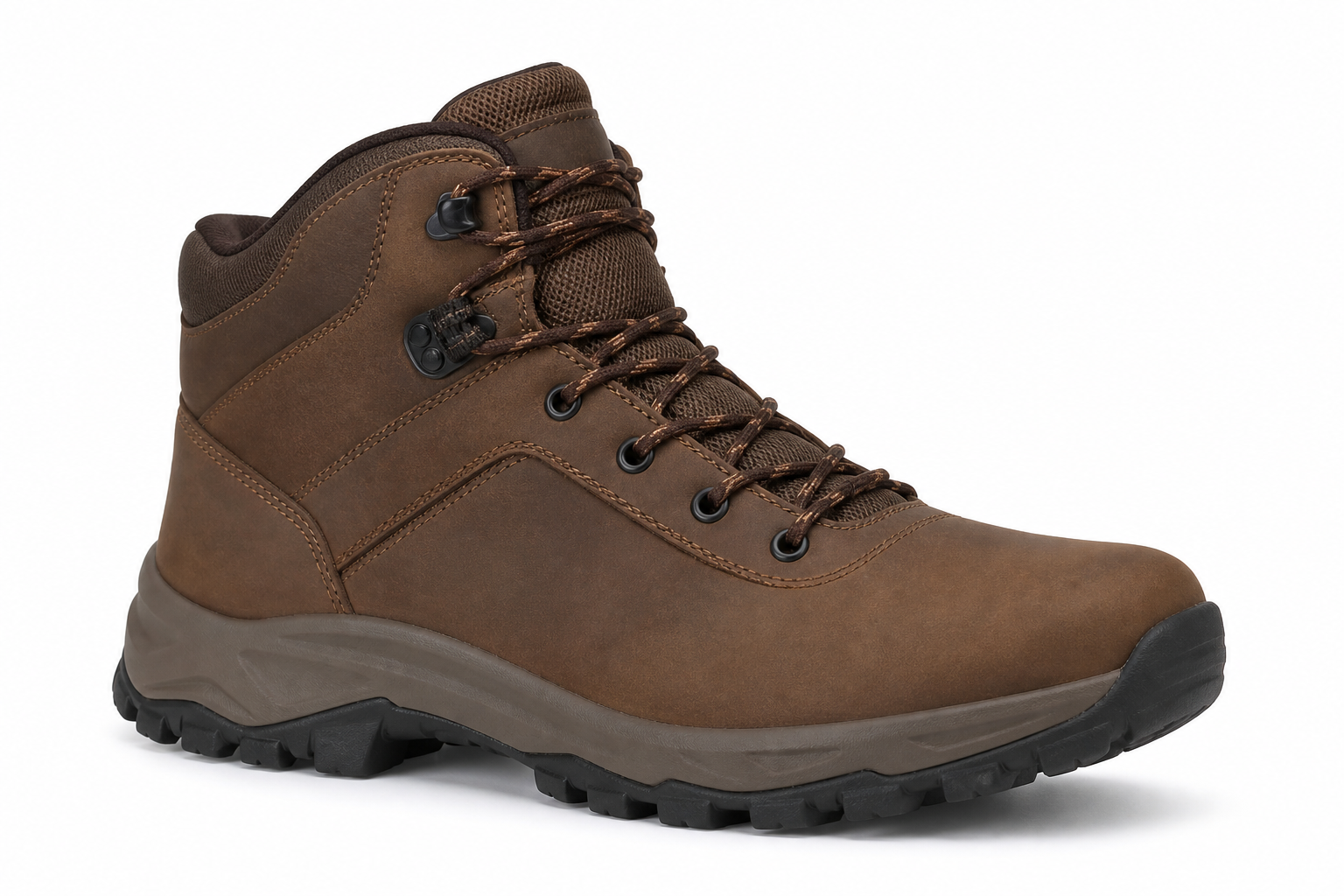
Mountain Gear 90s-style boots bring back the chunky silhouettes, suede panels, and earth-tone palettes that defined outdoor fashion in the 1990s — without the premium price tag of vintage collectors' pairs.
Retro trail character
The 90s look is more than nostalgia. Padded collars, contrast stitching, and multi-density soles were practical responses to long trail days before ultralight gear dominated shelves. Mountain Gear channels that era with modern adhesives and improved waterproof liners.
Pair tan or brown uppers with rolled denim, fleece, or waxed canvas for a cohesive weekend outfit. The boots read vintage from a distance but feel broken-in faster thanks to updated footbed foam.
Materials and build
Expect genuine leather toe caps with suede or nubuck side panels on heritage models. Mesh inserts appear on lighter Crosbey-inspired variants. Outsoles use deep lugs similar to classic hiking tread patterns from the decade.
Waterproof membranes are not standard on every 90s-style colorway — check product specs if you plan rainy Pacific Northwest weekends. Most owners treat suede with spray protectant and accept patina as part of the aesthetic.
Fit and sizing tips
Retro lasts can feel roomier in the toe box than slim city boots. If you are between sizes, try the smaller size with a medium hiking sock first. The padded tongue reduces lace pressure on long walks.
Break-in usually takes three to five short walks rather than a full mountain day. Flex the forefoot manually before your first mile to soften the shank slightly.
Styling beyond trails
These boots transition to coffee runs and brewery patios when the upper is clean. Brush off dried mud before driving so you do not scuff floor mats. Dark brown pairs hide city grime better than light tan.
For a full men's sizing guide see our for men collection page. Women often prefer the lower Ridge cut listed on the women's page.
Care for suede panels
Use a soft brush after each muddy hike. Never apply heavy oil to suede — it darkens permanently. Waterproof spray every few months maintains the retro look without saturating the nap.
Store with shoe trees or crumpled paper to preserve the rounded toe shape that sells the 90s profile. Avoid radiator drying; room temperature with airflow prevents sole separation.
Value compared to vintage
Authentic deadstock pairs from the 1990s can cost several times more and may have crumbling midsoles. Mountain Gear offers new construction with warranty support and consistent sizing — a smarter daily driver for most people.
If you need true waterproof performance for wet trails, cross-reference the hiking boots guide where Ascent Waterproof models are detailed.
Who should buy
Choose 90s-style Mountain Gear if you want personality without collector prices, mostly dry-climate walking, and an outfit anchor that works with work-from-home casual dress codes. Skip them for heavy construction — see steel toe options instead.
Sizing at home
Measure feet standing on paper after a walk when they are slightly swollen. Match centimeter length to brand charts rather than guessing from sneaker sizes. Width matters as much as length — pinching at the fifth toe means try wide versions if offered.
Try boots with the socks you actually hike in. Thin dress socks lie about fit and cause returns that waste shipping emissions and your weekend plans.
Warranty habits
Keep receipts and photos of defects within the first thirty days. Outsole delamination and eyelets pulling free are manufacturing issues; scuffs from normal trail abrasion are not. Document problems early with dated photos sent to customer service.
Trail pairing tips
Match lug depth to your typical terrain. Shallow lugs feel fine on crushed gravel rail trails but slip on wet clay. If your weekend loops include both sidewalk and forest, a hybrid Crosbey-style upper on a 90s sole may outperform pure suede panels that absorb water.
Color maintenance matters for resale and photos. Brush tan uppers after dusty desert hikes before storing — grit acts like sandpaper against suede when you cram boots into a closet shelf.
Long-term ownership
Budget boots reward owners who rotate pairs and log mileage. Note purchase month on the tongue lining. Midsoles often die before uppers show holes. When foam feels dead flat, retire the pair from hiking even if leather still looks acceptable for yard work.