
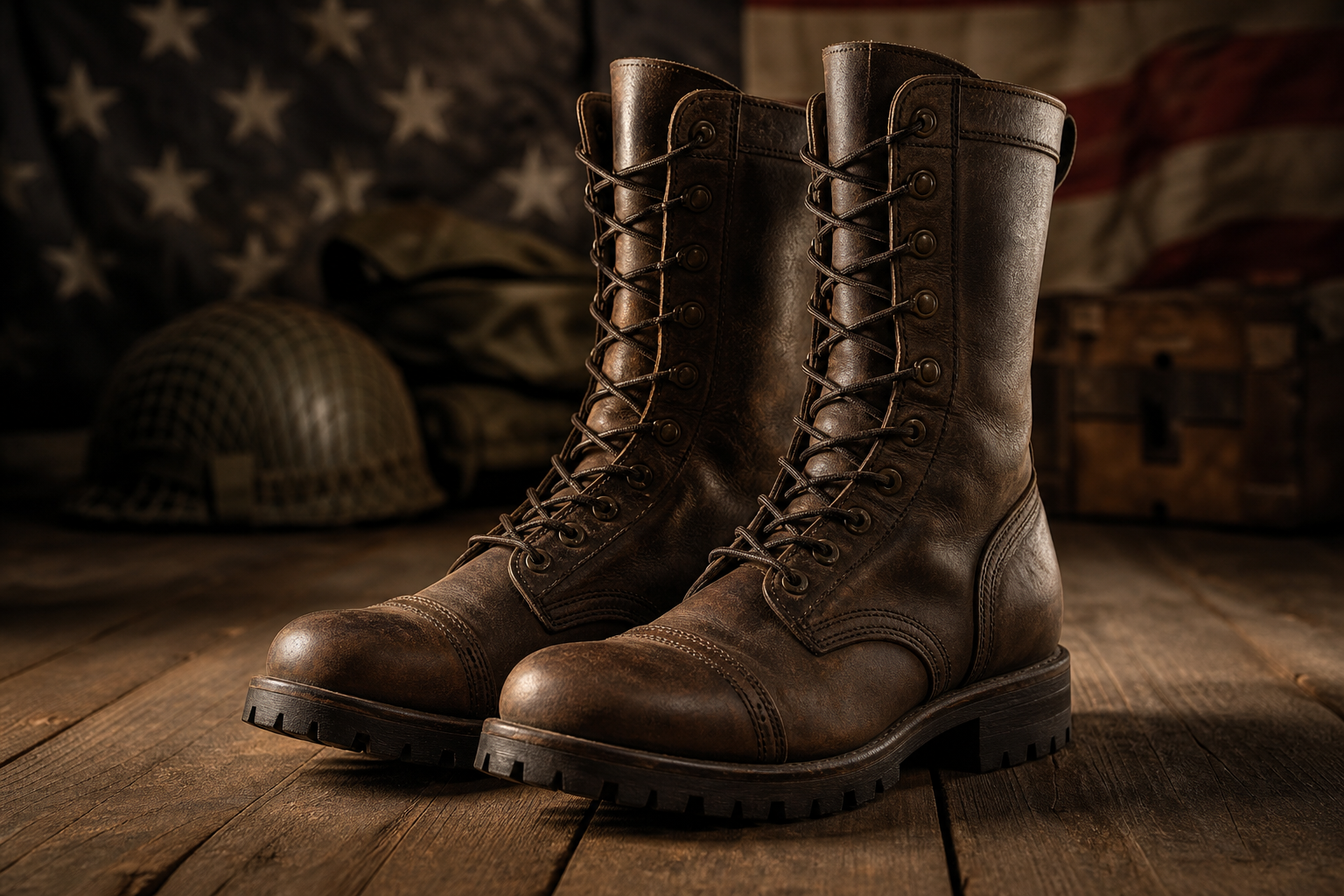
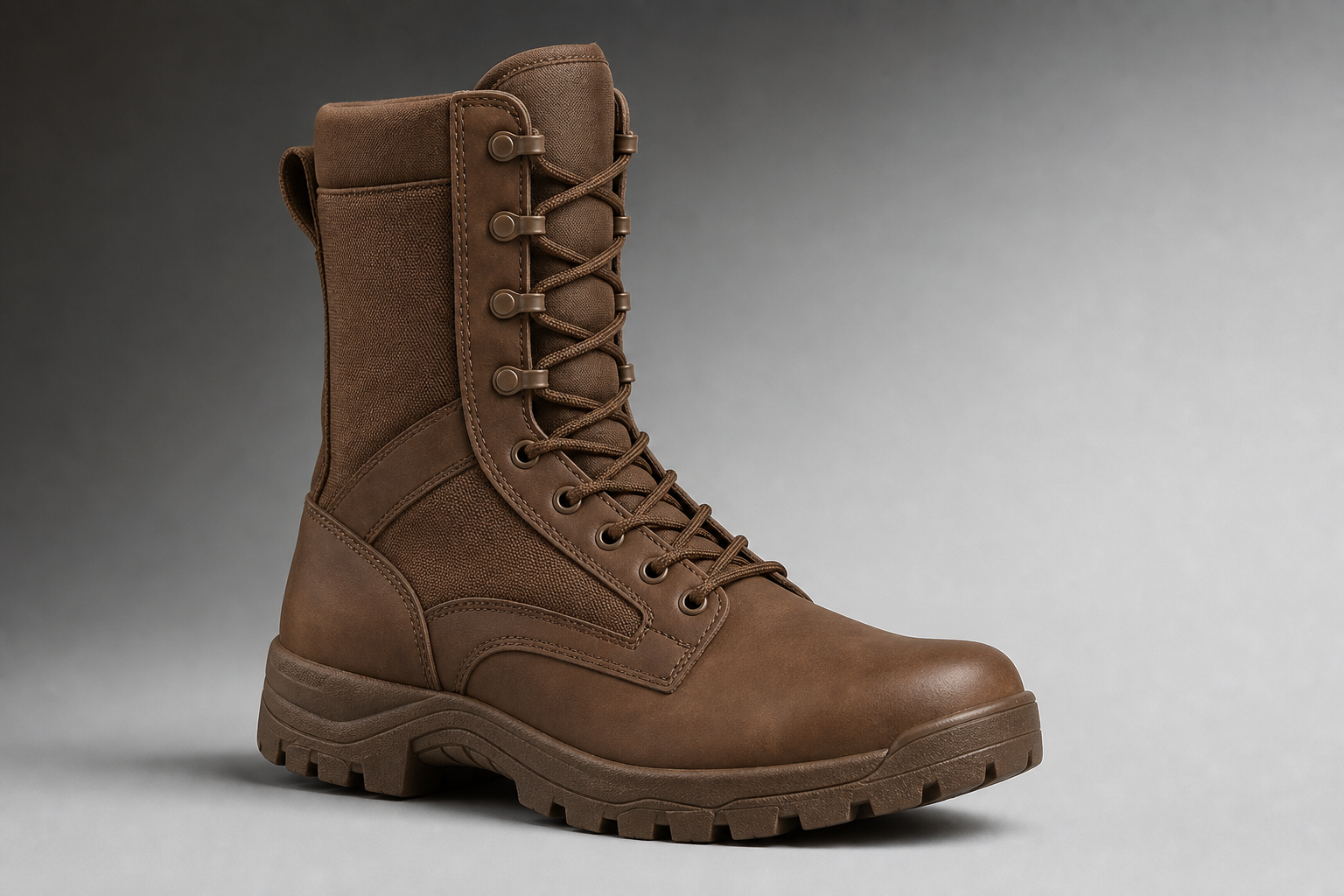
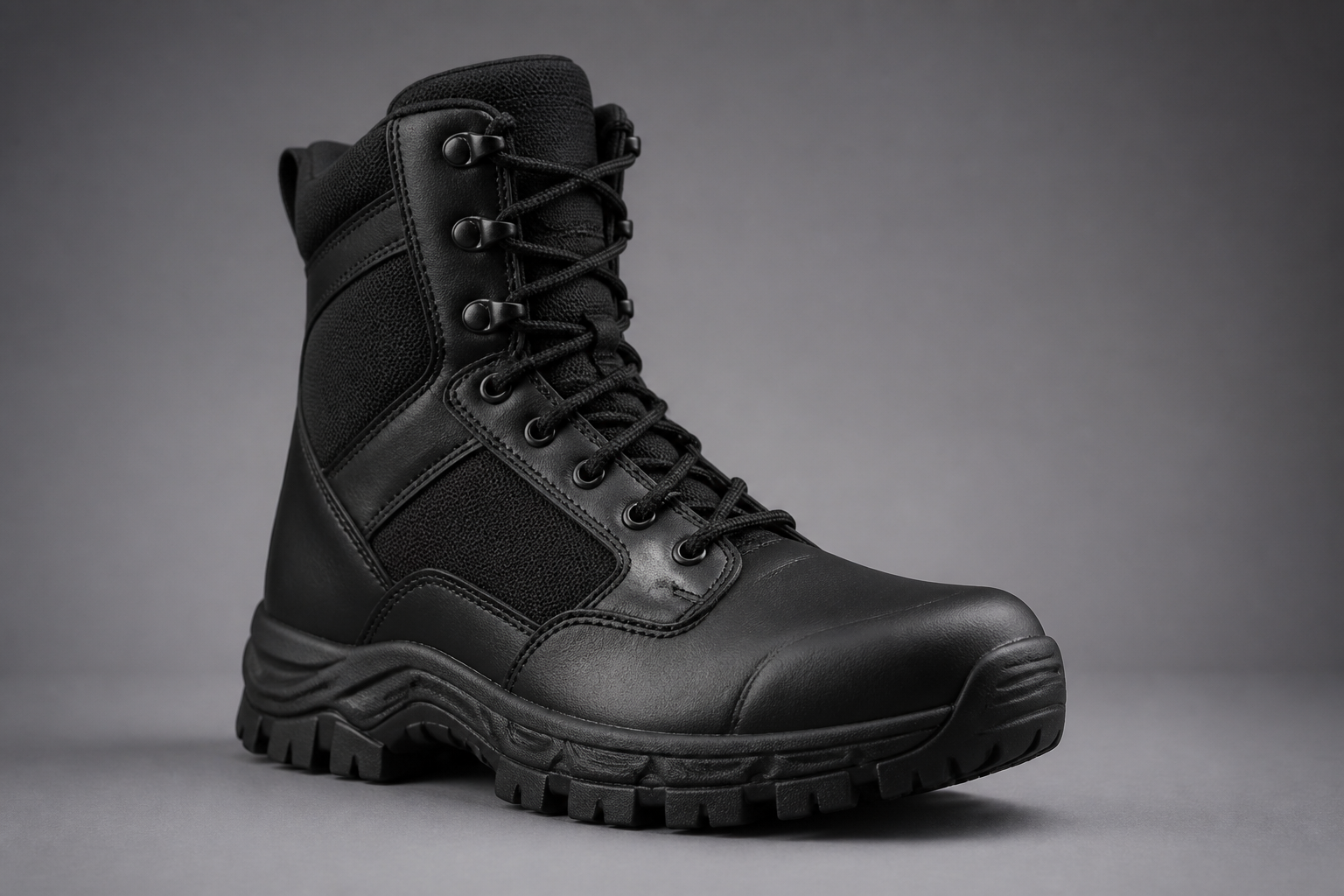
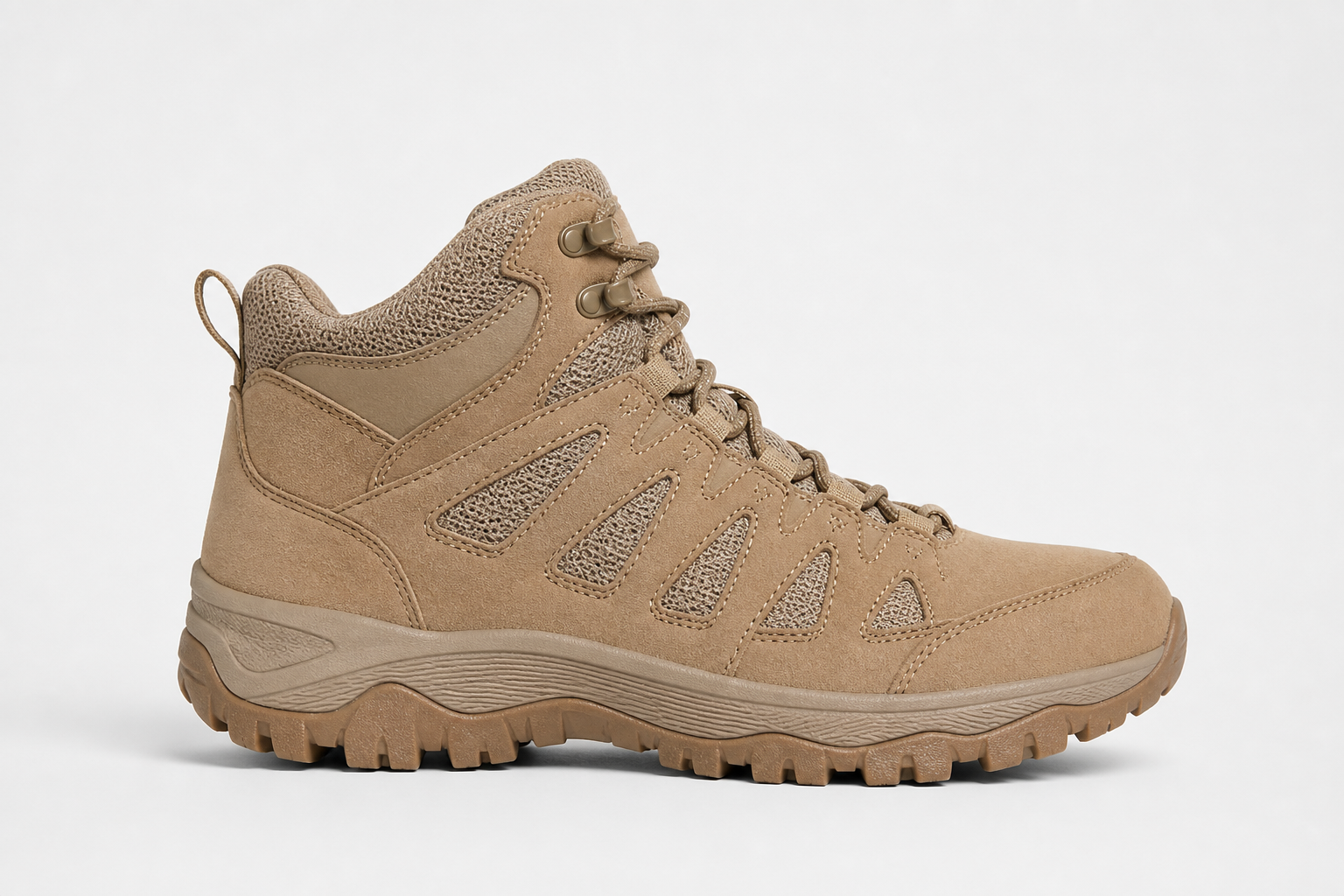
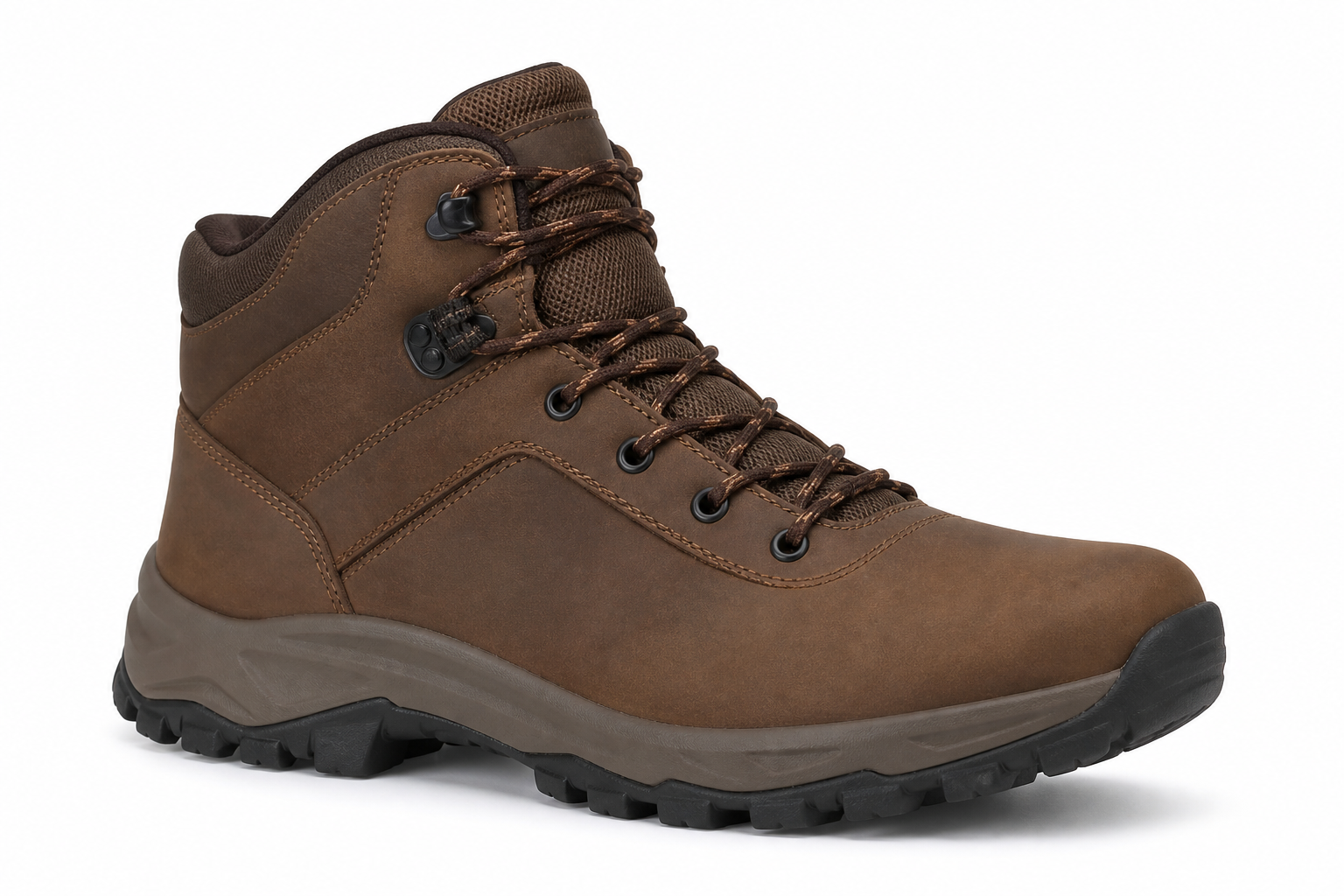
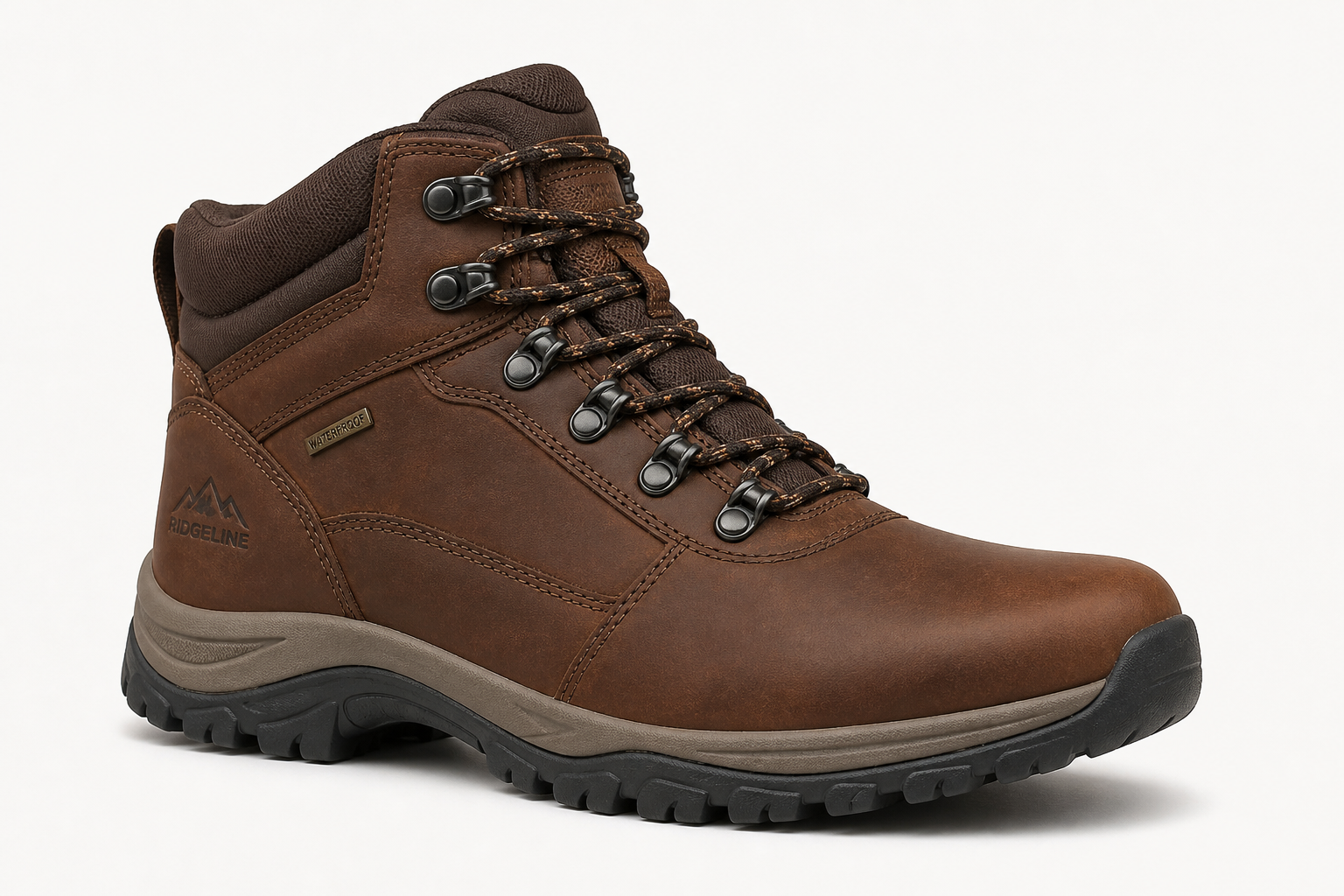
Mountain Gear D-Day boots echo WWII-era service footwear with modern cushioning for reenactors, history enthusiasts, and heritage street style. The silhouette references jump boots and service shoes without claiming exact historical reproduction — a distinction reenactors should verify against unit authenticity standards.
Film and theater costume departments also source these boots when a production needs durable lace-ups that survive wet backlots without custom cobbling budgets.
Historical silhouette
High lace zones, minimal padding visible from outside, and oil-brown or matte black leather define the look. Soles are thicker than original military specs for all-day comfort on pavement.
Reenactment use
Check event authenticity rules — some require reproductions without modern logos. Mountain Gear branding is visible on the tongue; cover or choose events allowing hybrid gear.
Modern footbeds
EVA midsoles absorb impact original service boots lacked. Arch support exceeds vintage pairs but may still feel flat to runners — plan insole upgrades.
Break-in period
Stiff leather uppers need gradual wear. Condition lightly before first march to prevent surface cracking on flex points.
Weather limits
Most D-Day styles lack waterproof membranes. Wax polish improves splash resistance temporarily. For wet trenches use waterproof hikers instead.
Sizing with wool
Thick wool socks were standard issue — size up half if you replicate that system. Toe room prevents numbness on long standing.
Care and display
Brush dust after events. Store on cedar trees to maintain shaft shape for photos and displays between wears.
Who buys them
Collectors, living historians, and fashion buyers wanting rugged lace-up character without vintage fragility choose D-Day models over true surplus when daily wear matters.
For wet parade grounds, treat leather uppers with beeswax before events and carry a microfiber cloth to wipe splash stains before they set into matte finishes.
Sizing at home
Measure feet standing on paper after a walk when they are slightly swollen. Match centimeter length to brand charts rather than guessing from sneaker sizes. Width matters as much as length — pinching at the fifth toe means try wide versions if offered.
Try boots with the socks you actually hike in. Thin dress socks lie about fit and cause returns that waste shipping emissions and your weekend plans.
Warranty habits
Keep receipts and photos of defects within the first thirty days. Outsole delamination and eyelets pulling free are manufacturing issues; scuffs from normal trail abrasion are not. Document problems early with dated photos sent to customer service.
Sole compatibility
Modern rubber outsoles grip wet tile better than original 1940s leather soles but still mark light hardwood. Carry soft sole covers for indoor memorial events if organizers require them.
Speed lace hooks save time at dawn musters but can catch brush — tape hooks if you patrol dense understory during living history weekends.
Collecting versus wearing
Display pairs belong on cedar forms away from south-facing windows. UV fades brown dye unevenly and hardens heel counters. Wear a separate pair for marching so collectors keep museum-grade appearance.
Storage basics
Never store boots near basement dehumidifier exhaust that dries leather overnight into cracks. Room-temperature airflow with shoe trees preserves collar shape and prevents mildew in fleece linings after damp hikes.
Label each pair with purchase year on inner tongue — midsole foam aging is invisible until knee soreness appears after otherwise easy miles.
Resole decisions
Budget boots rarely justify full resoles when new pairs cost similar money. Exception: steel toe uppers with intact caps but worn soles on a break-in-perfect fit — local cobblers can sometimes replace outsoles if the welt allows.
Return policies
Most retailers accept unworn returns within thirty days if boxes and tags remain intact. Walk only indoors on clean floors during try-on so you preserve return eligibility if the width is wrong.
Online buyers should measure both feet — many people have slight asymmetry that matters in safety toe boxes where cap position cannot shift.
Community tips
Local hiking clubs and trade forums often compare Ridge versus Ascent for regional trails. Search your nearest state park name plus boot model to find trip reports with mileage counts that match your fitness level.