
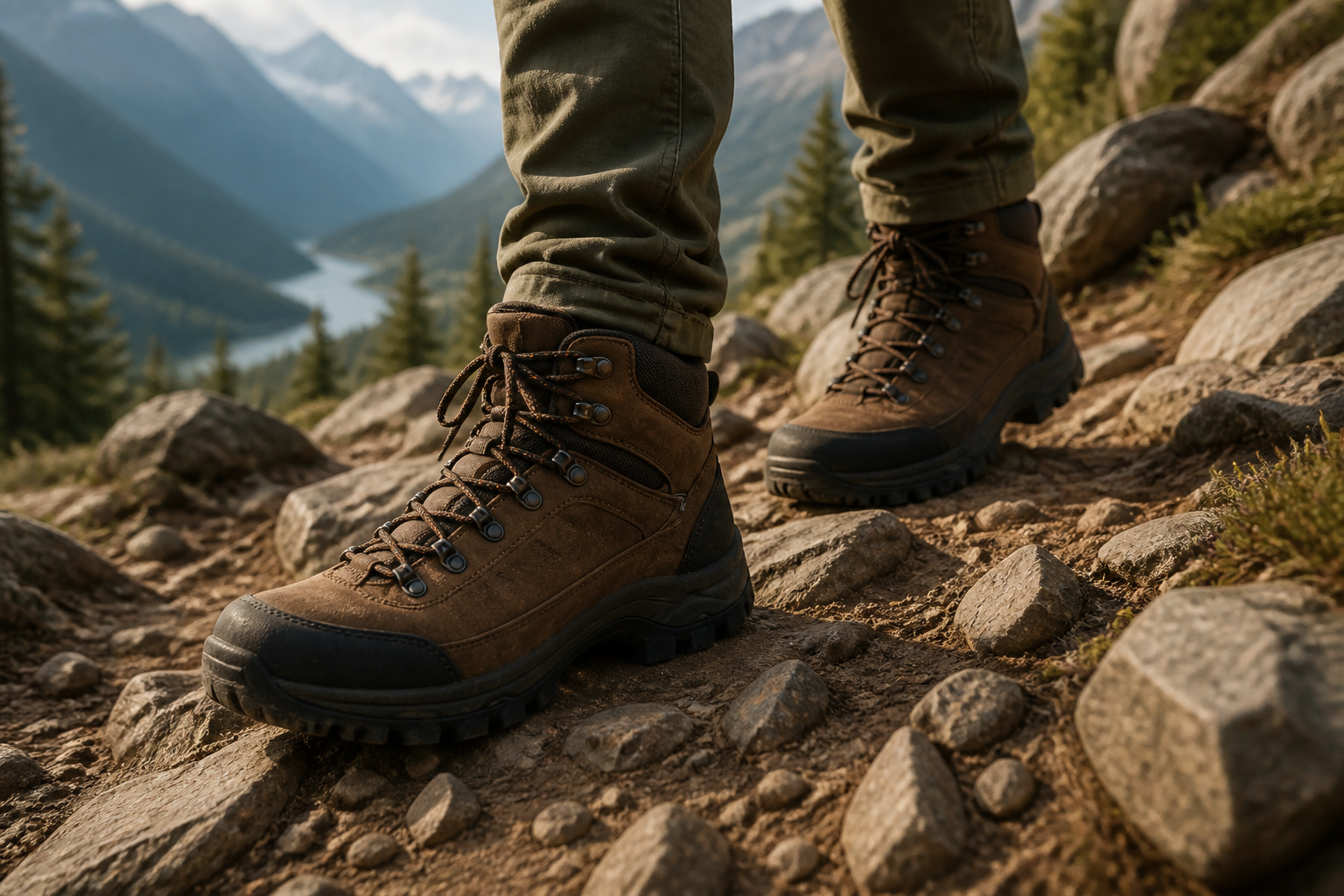
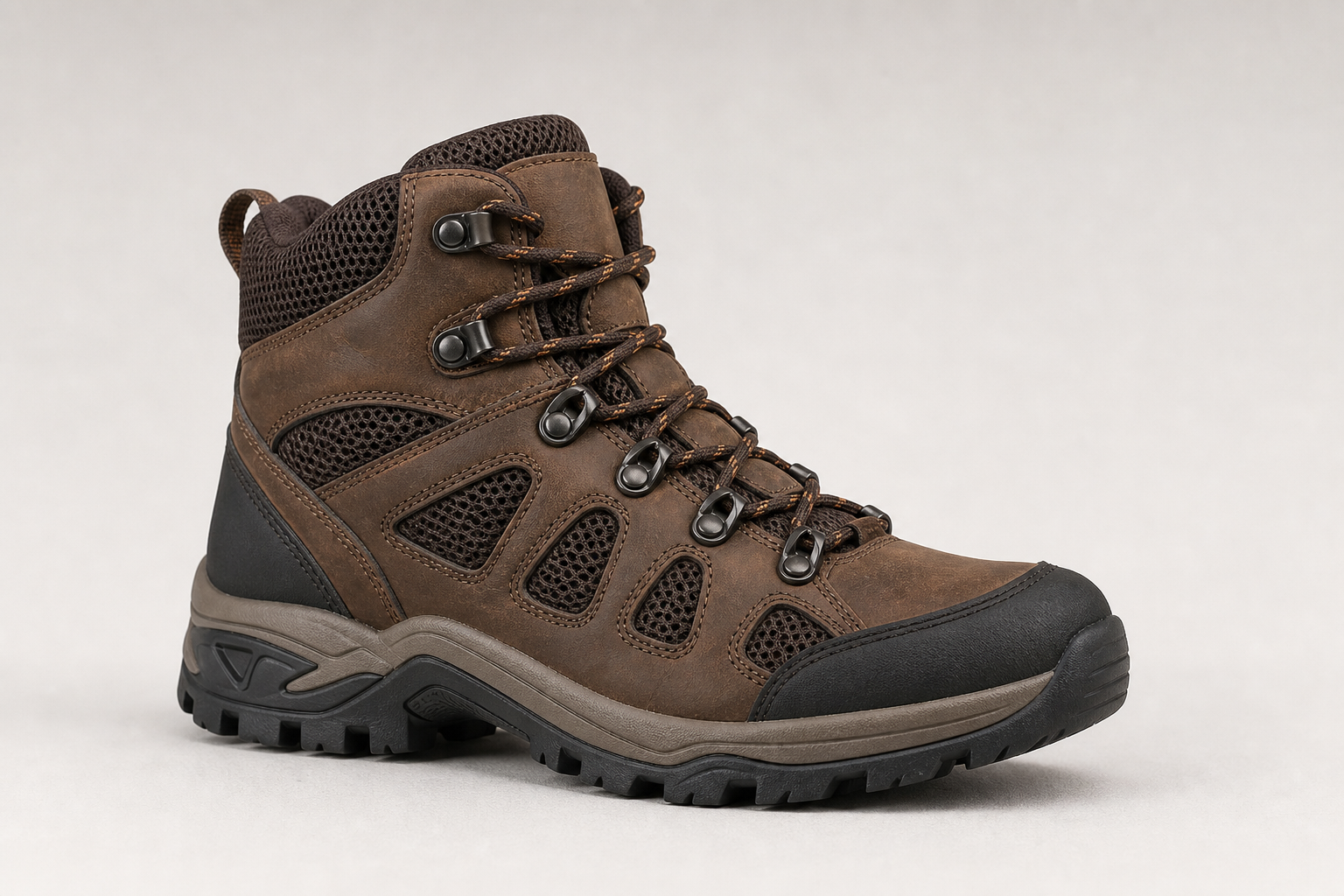
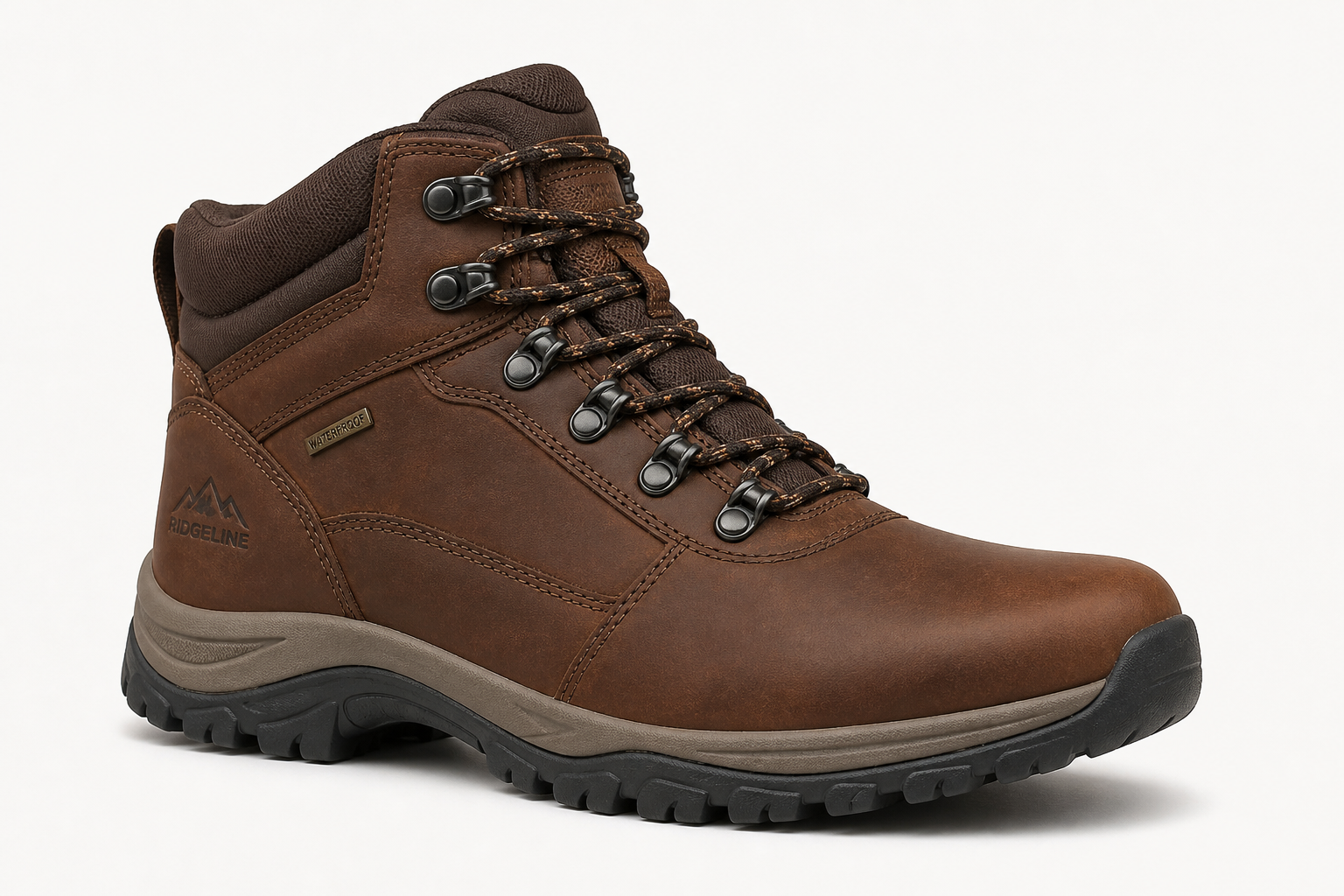
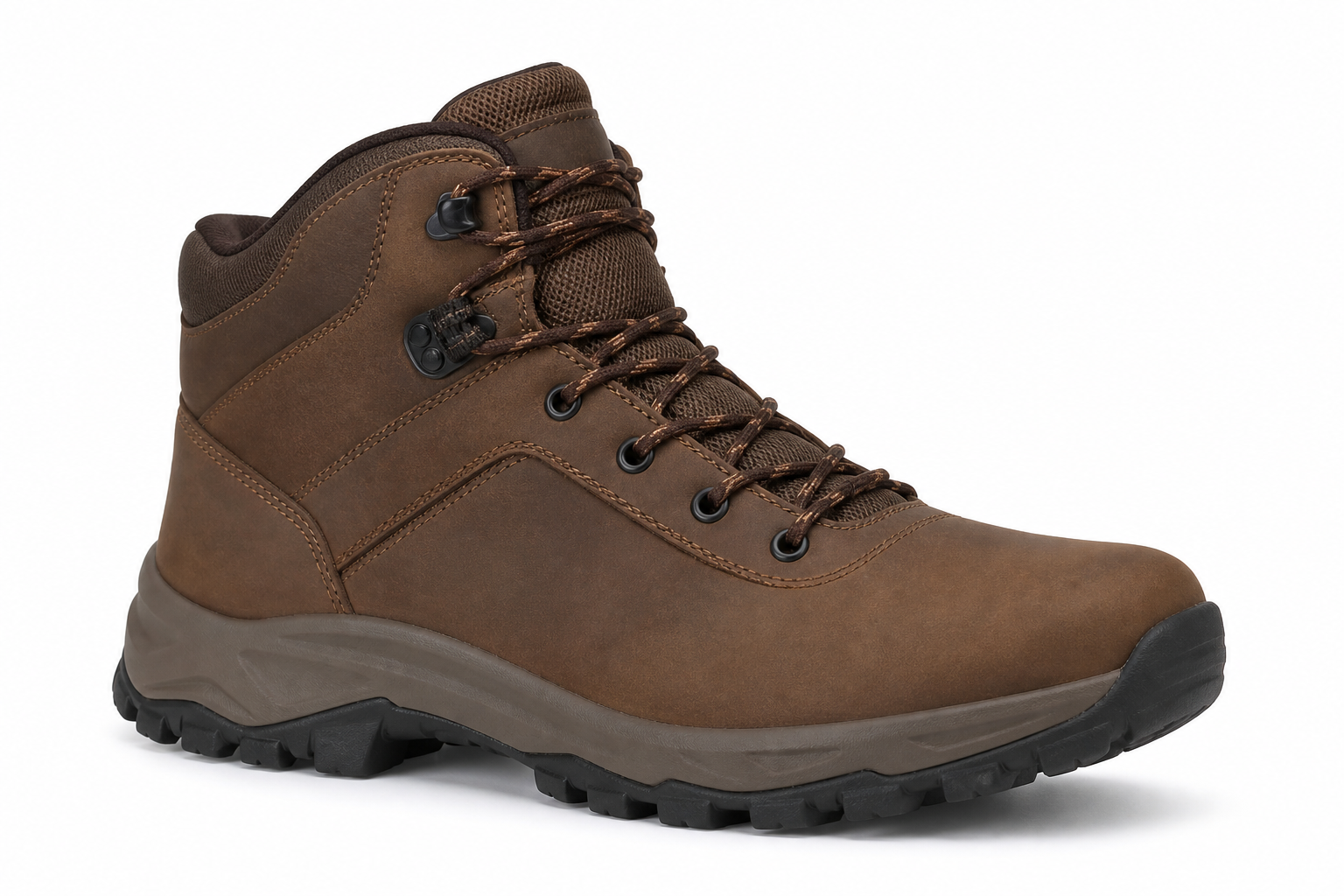
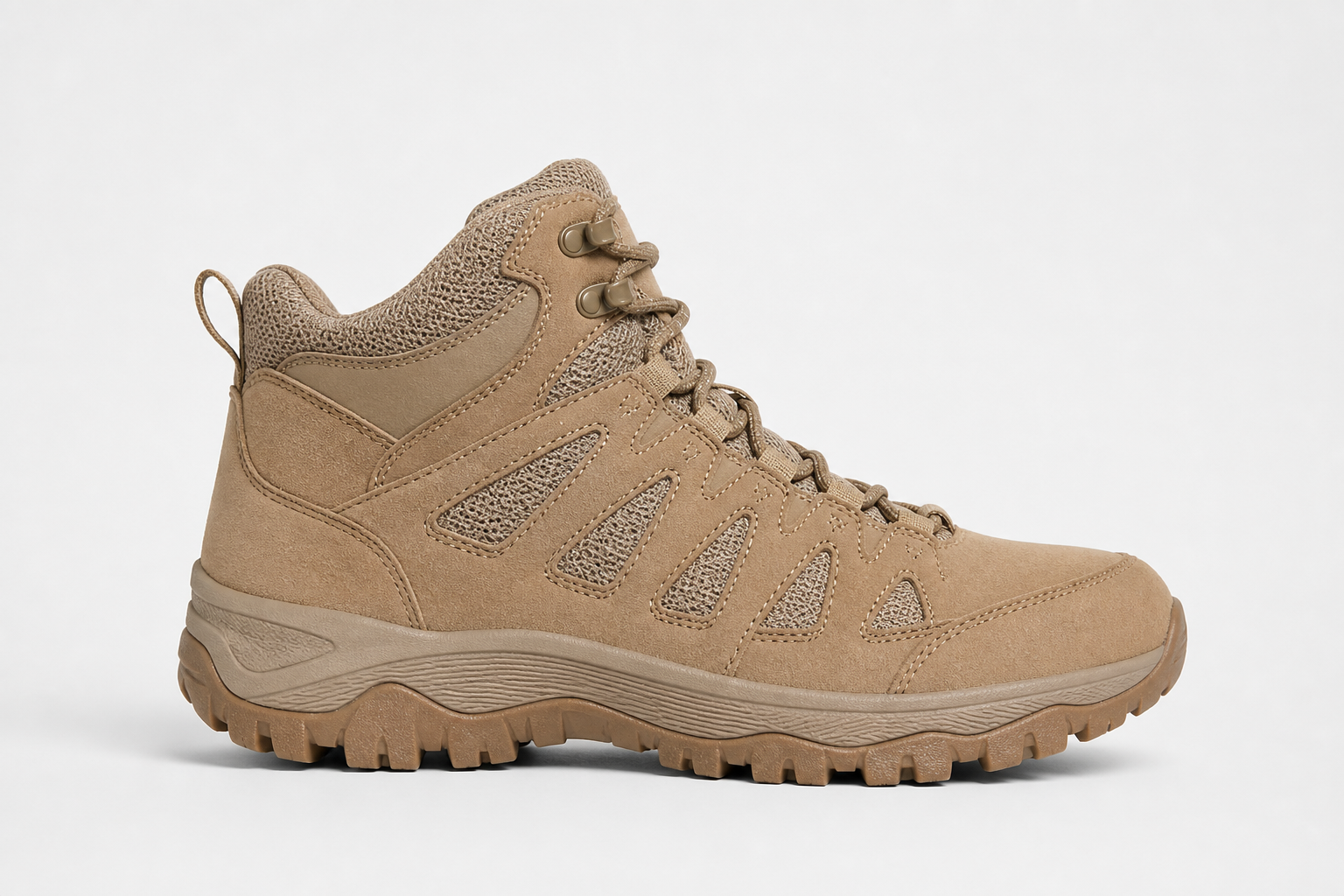
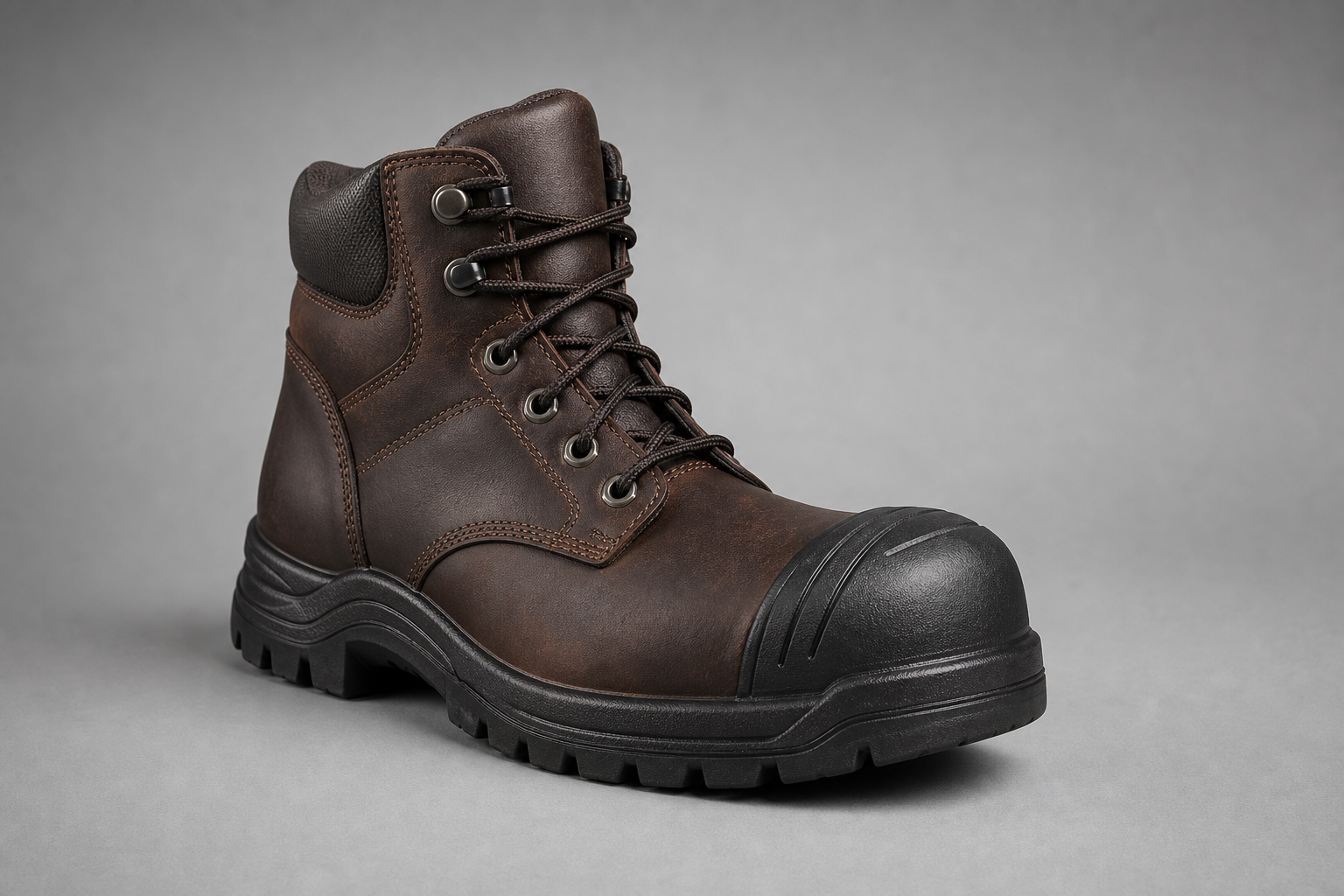
Mountain Gear boots for men cover light hiking, job-site weekends, and everyday errands with mid-cut support and budget-friendly pricing that undercuts heavy mountaineering brands. The men's catalog clusters around hybrid mids that look credible at a hardware store and still feel appropriate on a Saturday ridge walk.
Retail shelves usually stock brown and black core colors with seasonal olive and tan drops. If your local store carries only one men's model, it is often Crosbey Mid — a safe default for first-time buyers unsure whether they need waterproofing or breathability.
Top men's models
The Crosbey and Colt Mid lines blend leather, mesh, and air-cushioned midsoles for pavement-heavy weeks. Ascent Waterproof targets men who want a rugged mid-cut near $129.99 with membrane protection. Ridge Mid stays lighter near $109.99–$119.99.
Work-oriented buyers should compare the reinforced men's work boot against steel toe variants if OSHA requirements apply on your site.
Width and support
Most men's lasts run standard D width. High arches benefit from aftermarket insoles; the stock footbed is removable on several models. Lace hooks at the ankle let you lock heel fit without crushing the instep.
Heavier hikers over 200 pounds may prefer Ascent's stiffer shank over the flexible Ridge for rocky descents.
Seasonal rotation
Own at least two pairs if you alternate trail and work: one waterproof mid-cut for spring mud, one breathable low or mid for summer dust. Insulated work models cover winter job sites without buying a separate snow boot.
See work boots for insulated details and hiking boots for membrane care.
Break-in reality
Budget-friendly does not mean zero break-in. Wear new pairs around the block before a ten-mile hike. Hot spots at the heel usually mean lacing imbalance — try runner's knot techniques before blaming the leather.
Oil-tanned leather softens faster than full-grain polish leather. Match conditioner type to upper material.
Outsole traction
Rubber compounds prioritize wet rock friction over ice. Carry microspikes in winter rather than expecting alpine lug depth. Replace boots when heel lugs wear smooth — usually after 400–600 trail miles depending on gait.
Outfit pairing
Brown pairs with olive, navy, and charcoal workwear. Black D-Day styles suit monochrome streetwear. Camo models belong in field contexts — see the cam boots page for pattern notes.
Final advice
Men's Mountain Gear boots reward buyers who match model to mission: Ridge for breathability, Ascent for storms, Colt for daily hybrid wear. Measure feet in the evening when they are largest for the most accurate fit.
Sizing at home
Measure feet standing on paper after a walk when they are slightly swollen. Match centimeter length to brand charts rather than guessing from sneaker sizes. Width matters as much as length — pinching at the fifth toe means try wide versions if offered.
Try boots with the socks you actually hike in. Thin dress socks lie about fit and cause returns that waste shipping emissions and your weekend plans.
Warranty habits
Keep receipts and photos of defects within the first thirty days. Outsole delamination and eyelets pulling free are manufacturing issues; scuffs from normal trail abrasion are not. Document problems early with dated photos sent to customer service.
Lacing techniques
Heel lock lacing through top hooks prevents toe bruising on descents. Skip the lock if you have high insteps — pressure on the bridge causes numbness within an hour.
Replace round laces with flat hiking laces after the first year. Round laces loosen faster and are harder to grip with gloves during winter dog walks.
Budget stacking
Buying prior-season colorways during clearance can drop Ridge pricing well below MSRP. Function beats fashion for first pairs — add statement colors once you know your size across models.
Storage basics
Never store boots near basement dehumidifier exhaust that dries leather overnight into cracks. Room-temperature airflow with shoe trees preserves collar shape and prevents mildew in fleece linings after damp hikes.
Label each pair with purchase year on inner tongue — midsole foam aging is invisible until knee soreness appears after otherwise easy miles.
Resole decisions
Budget boots rarely justify full resoles when new pairs cost similar money. Exception: steel toe uppers with intact caps but worn soles on a break-in-perfect fit — local cobblers can sometimes replace outsoles if the welt allows.